
Ah, bloomin’ African violets
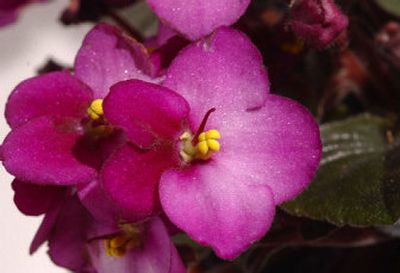
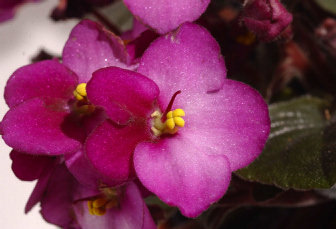
Many years ago my daughter gave me an African violet. We were at a Friends of Manito sale and she, then about 5 or 6, bummed a dollar from my friend – fresh out of allowance, again. It had deep purple blooms.
We took it home and placed by the kitchen sink where I could keep an eye on it daily. Remember I’m the one who grows only drought-loving house plants because I forget to water. My daughter turned 20 last week and the violet produced a couple of blooms in celebration.
As their name indicates, African violets are native to modern-day Tanzania. Surprisingly, they didn’t come to official attention until 1892 when the Baron Walter von Saint Paul, then the governor of the northeast province of German colony of Tanganyika, collected seeds from the plants.
Saint Paul sent seeds of the “Usambara violet” back to his father in Germany where it was given the botanical name of Saintpaulia in his honor. The plants came to U.S. in 1926, when the nursery company Armacost and Royston of Los Angeles imported the seeds to the U.S. Its popularity took off.
African violets are relatively easy to grow if a few specific needs are met. In its native environment in Tanzania, its grew on shaded rocky ledges with a consistent supply of moisture.
Soil and pots
African violets need to be planted in a good-quality potting soil that drains easily. Soil that holds too much water for too long can easily induce root rot. The crown of the plant should be planted just above the soil line for the same reason. Clay or plastic pots about one-third the diameter of the plant are best for planting.
Light
Few plants have adapted as well as African violets to growing under fluorescent lighting. In fact, most plants grown for shows and competition are grown under them. The lights should be placed about 10 to 12 inches above the plants and set to run for 12 to 14 hours a day.
The plant will also do well in bright but indirect light. North-facing windows are perfect during the summer and east-facing windows during the rest of the year. I will admit my African violet sits in my south-facing but tree-shaded kitchen window where it gets about an hour of sun in the winter and is shaded by the house eave overhang in the summer.
Temperature
Another point that makes African violets a good choice for a house plant is that it thrives in average household temperatures. Daytime temperatures should be between 70 and 80 degrees and nights should be from 60 to 70 degrees. Like most other houseplants, it doesn’t like extremes of either any better than the next plant.
Humidity
African violets like a fairly humid environment. Usually 40 to 70 percent is ideal. In the Inland Northwest, this can be a challenge during the summer months when our humidity is down in the low 20s. To help out, set the plants on trays of gravel filled with water to enhance humidity levels.
Watering
Watering is probably the biggest challenge in caring for African violets. If water gets on the leaves, it causes spotting. Water the plants from below either by filling the saucers or using a capillary mat. When using the saucer method, pour off any excess water left after an hour to prevent root rot. Capillary mats wick water from a reservoir and keep the plants evenly moist all the time.
Plants should be watered with lukewarm water when the soil surface is dry to the touch. Many growers prefer to use distilled water as the minerals in hard water and artificially softened water can build up in the soil. This is a challenge in the Inland Northwest where we are blessed with some really hard water with no alternatives. Treat the plant to some distilled bottled water once in a while to reduce the problem.
Fertilizing
We grow African violets for their cheery blooms even in winter. To keep the plant blooming, feed it a balanced fertilizer such as a 20-20-20 or one in which the middle number, phosphorus, is a little higher. Phosphorus is the key to blooming. The fertilizer needs to be mixed at a rate of a ¼ teaspoon to a gallon of water and applied at each watering.