
Program aimed at curbing panhandling goes begging
When Spokane business leaders launched the Change for the Better program last year, they hoped it would decrease panhandling in the city’s downtown shopping core.
The program encouraged people to donate to collection boxes, rather than to homeless people on the streets. Businesses placed 30 collection boxes around the city for the effort that has since been discontinued.
The boxes collected only $142, or about $4.73 a box.
“We had a very, very poor response,” said one business owner, who asked not to be identified.
Each of the clear, plastic change boxes costs less than $20 to make, according to a program official.
The program began a year ago, with a press conference in front of an upscale boutique, where a business leader said the boxes would be “almost as easy as handing the money to the person on the street.”
Larry Killstrom, director of the Security Ambassadors, said education – not financial return – was the key aspect of the program. Killstrom said he believes the program reduced panhandling but did not have any data to support the claim.
“Without a quantitative number, all we can hope is that we reduced the number of panhandlers,” Killstrom said. “I don’t know if we can actually measure how many stopped giving (to panhandlers), and then gave to the charities instead.”
Business leaders tailored the program after similar projects in Seattle and Missoula where donations are collected and sent to shelters. The Spokane program donated the $142 to three local homeless centers.
In 2004, the downtown program earned less than 50 cents a day. On a good day, several panhandlers said, they can earn $10 – perhaps more if they secure a spot near a busy intersection.
Anthony Rounsville, a 21-year-old homeless man, said the city program had not cut into his panhandling profits.
“Some people are always going to help you out because they know what it’s like to go hungry,” Rounsville said. “Others just walk by without even looking at you.”
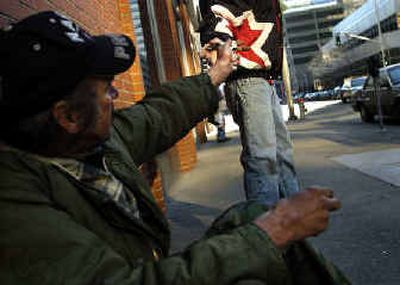
On a sunny morning this week, Rounsville and his friend Chychn, a 31-year-old homeless man, stood in front of a drug store asking people for spare change.
Chychn said people seemed as willing to give now as ever, but emphasized that panhandling wasn’t making him rich.
“It’s enough for a couple Whoppers and a six-pack of beer,” he said.
While the boxes have been collected, several businesses continue to hand out pamphlets encouraging people to give to charities, not individuals.
Chychn believes panhandling will continue, despite the program.
“There’s always going to be people asking for change,” he said.