
Jones brings energy to new job

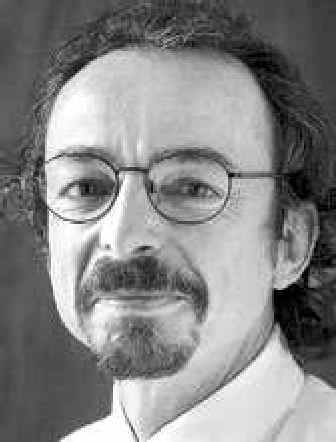
Philip Jones hasn’t gotten around Spokane much since graduating from Shadle Park High School in 1971 as valedictorian. Tokyo, yes. Amsterdam, yes. Seattle, Washington, D.C., and Cambridge, Mass., yes. Last week, Washington Gov. Christine Gregoire appointed Jones to the Utilities and Transportation Commission. That should keep him parked in Olympia, at least for a while.
Jones has been the most mobile of three sons born to Clair and Carol Louise Jones, owners of the now-closed Harvey’s men’s clothing stores in Spokane and Coeur d’Alene. Brother Patrick is the executive director of the Eastern Washington University Institute for Public Policy & Economic Analysis. Harvey Jones founded the Cutter & Buck sportswear company in Seattle, and Phil most recently worked for Cutter & Buck as its managing director for European operations.
Phil Jones says his service on the three-member utilities commission will allow him to apply the knowledge in energy matters he accumulated as a member of former Sen. Dan Evans’ staff during the 1980s, and as a Seattle-based energy and trade consultant through the early 1990s. He concedes he has much to catch up with in telecommunications oversight, the commission’s other major responsibility.
Jones downplays renewed calls in Washington, D.C., for the Bonneville Power Administration to raise wholesale electricity prices in the Northwest. President Ronald Reagan’s economic adviser, David Stockman, in 1984 suggested Bonneville be sold off, and one plan or another that would raise the region’s historically low electricity rates has been floated periodically over the last 20 years, he says.
“It seems like déjÀ vu to me,” says Jones, who quickly adds there are plenty of other challenges facing state regulators.
The Federal Energy Regulatory Commission, for example, wants to expand its role in siting transmission lines and new generating facilities. The potential for intervention by Washington, D.C., frustrates the region’s efforts to address those requirements, he says, and creates uncertainty poisonous to industries considering a move or expansion in the Northwest.
Jones says economic development and energy issues have long been intertwined in Washington state. He says he and Mark Sidran, Gregoire’s other new appointee to the commission, expect to work closely with the governor to make sure adequate supplies of energy at reasonable prices are available to sustain a growing economy.
Business expansion, especially trade-related business expansion, is Jones’ other calling. For starters, he was involved in a deal that transformed the automobile industry in the United States.
Jones landed in Tokyo almost as soon as he graduated from Harvard University. Fluent in Japanese, he was working for a small business journal. A Harvard classmate was also in Japan working for the state of Ohio, which was discussing with Honda its expansion plans for the U.S. When his friend decided to jump to General Electric Japan, Jones was quickly recruited to take his place.
“They needed someone right away,” Jones says. Ohio took a chance on someone in his mid-20s who at least knew the language, Tokyo, and the social skills critical to establishing good business relationships with the Japanese. That was particularly true of Honda and the Honda family, which already had a motorcycle plant under construction in Ohio. Still, several other states were competing fiercely for the auto plant. Ohio won that contest, with Jones helping resolve company concerns regarding infrastructure. The company now employs 13,000 in Ohio. Other Japanese automakers who followed employ many thousands more.
“We knew it was going to be big,” Jones says. “We didn’t know how big.”
Remarkably, Jones never set foot in Ohio in the three years he worked for the state. He returned to the U.S. in 1981 to direct the Program on U.S.-Japan Relations at Harvard. During his years with Evans, Jones says he had probably the most memorable moment in his career: a meeting with then Chinese Premier Deng Xiaoping, who set that country down the road to capitalism.
He believes strongly in the benefits of trade, even when that might not be the most popular point of view. Jones organized a state coalition to support the North American Free Trade Agreement, and recalls evenings spent in union halls absorbing angry warnings the treaty would send jobs overseas.
Though he speaks well of Washington’s effort to promote exports, Jones says the state also must more aggressively pursue foreign investment, as Ohio did when courting Honda.
“The rest is history,” Jones says.