
Harold’s packs it in

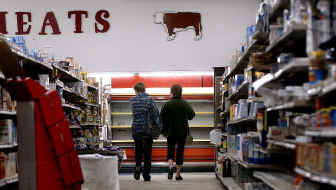
The doors of Harold’s Super Foods are still open, but the life of the Sandpoint icon has mostly slipped away.
Hand-painted signs in the large plate-glass windows read like an obituary for the town’s last independently owned grocery, which has served loyal locals since 1943.
“Close out sale.”
“25% off everything must go.”
The near-empty shelves with odds and ends of canned fruit, beans and a few bags of noodles are only further evidence that the final days are near. Customers wandered the aisles almost aimlessly last week, as if they were there to pay their respects.
“Do you know when the last day is?” a regular asked manager Mollie Tenney, as she put out a few remaining cans of Slim Fast on a shelf next to dusty bottles of generic shampoo.
“Nope. We haven’t really decided,” Tenney said. “I’m in no hurry.”
The conversation quickly turned to fishing and the unusually warm winter, anything other than the tentative March 1 closing. The store could hang on a few more days if there’s still food to sell.
Unlike in many small towns, Wal-Mart, Safeway and the other supermarket stores aren’t to blame for Harold’s demise. The family that has owned the grocery for more than six decades is just tired, ready to move on.
Tenney, 42, has worked at the store since about age 14. She took over two years ago from her father, Ralph Bloom, who still comes in daily. Bloom became manager when his father-in law, Harold Marley, the store’s namesake and founder, was murdered in 1981. The 17-year-old shooter hid in the store’s bathroom and shot Marley twice as he closed up.
At age 84, Harold’s wife, Lily, still comes in once a month to sign 42 paychecks.
“The days of the independent grocery are over,” said Mollie’s husband, Mike. “It’s just too hard to have to be here all the time. You have to be married to the store.”
Last year, his wife took one day off – to run Bloomsday. Every other day she was up at 4:30 a.m. to open the grocery and the next-door laundromat, which is expected to remain open.
The fate of the block-sized lot between Fifth and Fourth streets is unknown. Panhandle State Bank wants to replace the grocery with a multistory headquarters that could include a community center. Those plans are on hold until the Sandpoint City Council decides whether to allow taller buildings downtown.
The Sandpoint Planning Commission is having a meeting March 15 to try to better define where in downtown buildings up to 60 feet tall would be allowed.
John Elsa has been one of the town’s most vocal opponents to the proposal to increase building heights. He spent hours outside Harold’s collecting signatures for a petition he presented to the city.
When the store closes, he’s worried about what will happen to his coffee klatch – the World War II veterans he meets in the mornings at Harold’s café.
“Change isn’t always necessarily a good thing,” said Elsa, 53.
Downtown presence
Last week early-morning shoppers wondered around Harold’s picking through large $1 sale bins or buying one last dozen doughnuts or fried chicken leg from the bakery.
An elderly man in a red wool hunting cap and a green plaid jacket stared blankly into a freezer that housed a few cartons of ice cream scrunched between bags of frozen vegetables.
“I’m sure going to miss this place,” he said, declining to give his name as he shuffled away.
He’s not alone. Many Sandpoint people wonder what will happen to the older generation that has shopped at Harold’s since it opened across the street as the old Sandpoint Ice and Fuel in 1943.
Many elderly and low-income shoppers liked Harold’s because it is the only downtown grocery, within walking distance to many neighborhoods. The store also let shoppers keep charge accounts so people could pay their bill when their Social Security check arrived.
Mike Tenney said he even made deliveries to a few loyal customers who can’t leave their homes.
“Every single customer is just really disturbed,” checker Burklie “BJ” McIntire said. “They look really sad. They just don’t know where to go. They don’t like dealing with the big-time store chains.”
The store, which burned twice in the 1960s, has become a loved landmark since Harold Marley opened it with his brothers, Clyde and Emmett, and brother-in-law, Loren Book.
It’s not the cinderblock building that’s so special. It’s not even the tiny corner café with its wood paneling and vinyl-covered booths.
People came to Harold’s for the fellowship.
Former Rep. John Campbell, R-Sandpoint, made Harold’s café his unofficial office, stopping by every morning for a pancake and a side of the hottest gossip.
He admired Ralph Bloom for helping the elderly survive and giving jobs to those in need.
“He kind of took care of the town,” said Campbell, who now lives in Boise. “He helped people when they were down.”
A quiet end
Now the most sentimental customers are doing whatever they can to take a piece of Harold’s home with them.
Some people bought chocolate macadamia nut cookie dough from the bakery so they can bake up some memories when they get lonely for Harold’s. Others are asking for bits of memorabilia from the cut-out cows above the meat counter to the flimsy cardboard signs hanging from the ceiling that read “Shop Smart.” Others want the hand-made wood beams that hold up the roof or booths from the café.
“Some people want to buy the cinder blocks,” Tenney said shaking his head. “What is this, the Berlin Wall?”
As Tenney talked, the intercom interrupted the oldies music station to page Mollie.
Tenney said his wife is happy to move on and have some freedom.
Mollie Tenney and her father aren’t willing to talk with reporters. Mike Tenney has taken over as the family spokesman and said they just want this part of their life to fade out quietly. They are humble and don’t want any fanfare, he said.
Tenney said he knows people are upset. He is repeatedly asked, “Why?”
For him, the answer is easy.
“We’re taking the kids to Coos Bay to do some crabbing and clamming,” Tenny said. “I know it’s sad. But it’s good.”