
Allocating precious water
Some of the hottest new technology in sprinklers is in the area of managing water use.
Todd Watson, president of Auto Rain, one of the region’s largest suppliers of sprinkler equipment, says the Environmental Protection Agency is developing a rating system similar to the Energy Star system now available to rate the efficiency of electrical appliances. The Water Star rating system “will be the same type of deal where (irrigation) products will have to meet efficiency standards,” to get a rating.
Much of the new sprinkler technology has to do with managing when and how much water is applied to the landscape. Because people tend to overwater, they use more water than they need. Controller boxes, which allow the homeowner to customize applications so that different sections or zones can be turned on a wide variety of cycles, are now easily obtainable.
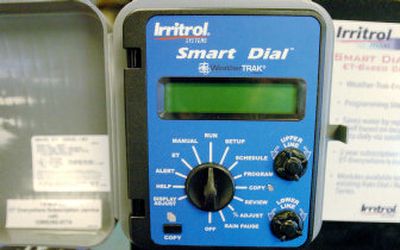
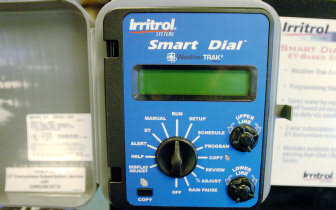
A new controller by Irritrol Systems takes this timing process to new heights – literally. The company’s new Smart Dial series of controllers combines satellite technology and a sophisticated site-specific data program to create a real time watering schedule that delivers the right amount of water every day.
The satellite technology takes daily readings from 250 automated weather stations within 50 miles of Spokane and down links the information to the controller. The weather information is combined with the site specific information in the controller’s database on sprinkler type and location, precipitation rates, and plant and soil types to create a daily program for watering.
“This is about as close to ‘set it and forget it’ as you can get. The one catch is that a 12-station unit is retailing for about $800 which includes two years of satellite service,” says Watson. Satellite service runs $4 a month thereafter.
Several companies are producing rain and freeze sensors that can be added to controller boxes.
“Nobody has to worry about turning the system off. The switch overrides it,” says Watson. Freeze sensors will shut the system down when temperatures drop low enough to cause freeze damage. Once the moisture and temperatures rise, the sensor switches the system back on.
These switches are designed to be installed out in the open where they can read daily rain and humidity levels. They come in a hard wired (about $35) and a wireless model (about $80). It doesn’t take much of a savings in water to pay for this nifty gadget.
Spray patterns on conventional and rotor sprinkler heads have also evolved so they are now more even, the heads are easier to adjust so you no longer have to stand on your head, while trying to adjust the throw pattern with a tiny screwdriver all while getting drenched.