
Teenage prisoners blame the Taliban
LONDON – Some were baby-faced teenagers too young to grow facial hair. Others said they were snatched from their families and forced to work for Afghanistan’s Taliban.
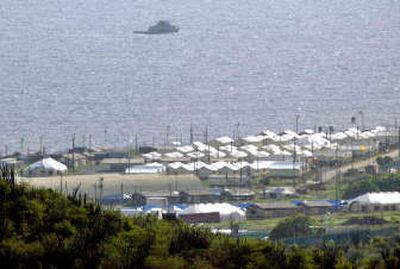
The stories of the youngest detainees at Guantanamo Bay, Cuba, chart their journeys from childhood in Afghanistan to U.S. custody, according to military tribunal transcripts obtained by the Associated Press under a Freedom of Information lawsuit.
Guantanamo officials released three Afghan boys ages 13 to 15 last year, but the transcripts of the hearings to determine whether prisoners were correctly classified as “enemy combatants” verify they weren’t the only teenagers at the prison camp.
Although the U.S. government blacked out most ages from the documents, some remained, including the story of an 18-year-old who said he’d been at Guantanamo for two years. He was accused of firing at U.S. troops in Afghanistan. He denied it and described how the Taliban arrested him.
“My infant cousin was born. We had a party. We were playing the drums. We were having fun. When they came they broke the tapes, they broke the drums, they took me to jail, they beat me with a cable, then they put salt in it – my wounds,” he told the tribunal.
In many parts of Afghanistan, the Taliban regime prohibited music and dancing, imposing a strict form of Islam. They also forced children into religious schools to study the Quran.
Another teen prisoner accused of links to an al Qaeda explosives cell said the Taliban came to his village and forced people to work or undergo training.
“At that time I had no beard or facial hair. They told me I was too young to go to war,” he testified. “They wanted to train me and then work with them.”
The Taliban sent him to a technical school where he received two days of training. He said he hid from the Taliban each day so he didn’t have to go to school. The Taliban stopped looking for him after the Sept. 11 terror attacks, but he was then captured by the Americans, who he claimed abused him.
“They put a knife to my throat, tied my hands and put sandbags on my arms,” he said. “At the airport in Khost, I was walked around all night with the sandbags on my arms.”
He said he was interrogated at the U.S. base at Bagram “and punishment increased.”
“I was very young at that time, so whatever they said, I agreed to,” he said. “I never admitted to being an associate of an al Qaeda explosive cell leader, and when I came to Cuba, I gave them the true story.”
Shortly after the camp at Guantanamo opened in January 2002, human rights groups protested the capture and imprisonment of detainees under 18.
Guantanamo no longer is holding anyone 18 or under, said Lt. Cmdr. Chris Lounderman, of the U.S. Southern Command in Miami, which oversees the camp. It was unclear whether any 19-year-olds are held or how many teenagers have been at Guantanamo.
About 34 of about 550 prisoners have been ordered freed since the tribunals ended in January. The U.S. government doesn’t publicly provide reasons for freeing detainees so it’s unclear whether being forced to join the Taliban would have affected any cases.
The United States defines an enemy combatant as someone who was part of or supported the Taliban or al Qaeda.