
Senate regrets allowing lynchings
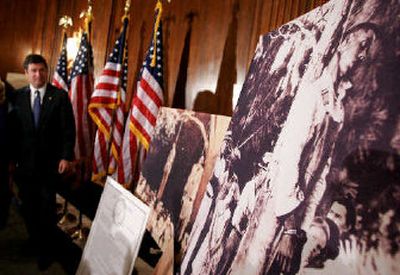
WASHINGTON – The Senate on Monday acknowledged its own failure to stand against the lynching of thousands of black people, a practice that continued well into the 20th century.
“It’s important that we are honest with ourselves and that we tell the truth about what happened,” Sen. Mary Landrieu, D-La., said before the Senate by voice vote approved an apology for blocking anti-lynching legislation at a time when mob violence against blacks was commonplace. At least 80 senators signed on as co-sponsors.
Nearly 200 descendants of lynching victims, and a 91-year-old man thought to be the only living survivor of a lynching attempt, listened in the gallery.
An estimated 4,743 people were killed by mob violence between 1882 and 1968. Of those, nearly three-fourths, 3,446, were blacks. Lynchings reached a peak of 230 in 1892, but they were prevalent well into the 1930s. Twenty lynchings were reported in 1935.
During that time, nearly 200 anti-lynching bills were introduced in Congress, and three passed the House. Seven presidents between 1890 and 1952 petitioned Congress to pass a federal law.
But the Senate, with Southern conservatives wielding their filibuster powers, refused to act. With the enactment of civil rights laws in the 1960s and changes in national attitudes, the issue faded away.