
Muslim workers walk off job
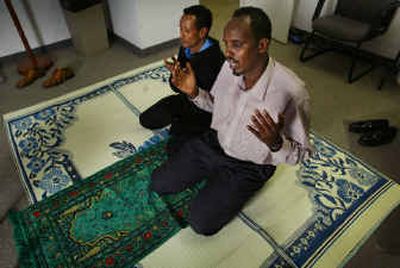
NASHVILLE, Tenn. — Thirty Muslims walked off the job at a Dell Inc. plant after alleging the company refused to let them pray at sunset — the latest dispute over prayer between an American business and its Islamic employees.
The Muslim workers, who were packaging Dell computers through a temporary labor agency, are taking the dispute to mediation, both sides said Friday. Most of the employees are from Somalia.
Abdirizak Hassan, executive director of the Somali Community Center of Nashville, said the workers walked out of the company’s Nashville plant last month because they were not allowed time for prayers.
The question of how to integrate Islamic prayers into the American workplace is becoming far more common, with many companies using a “tag out” system to accommodate the prayers, said Ibrahim Hooper of the Council on American-Islamic Relations. The policy allows workers to step away a few at a time for sunset prayers.
Muslims are required by their faith to pray five times a day. Most of the prayer times are flexible, but the sunset prayers must be said at dusk.
Byrne Mulrooney, a spokesman for labor agency Spherion Corp., said the company was still trying to determine what happened. He said the Fort Lauderdale, Fla.-based company has a good record of accommodating its Muslim workers.
Dell spokesman Mark Drury said company officials are looking into the Feb. 4 incident. He said the Round Rock, Texas-based company has a “tag out” policy, and wants to know if Spherion was following it.
Dell employs about 3,000 workers at its facilities in Nashville and Lebanon, Tenn., and “a number of contract workers on top of that,” Drury said.