
Vote set on Alaska oil drilling

WASHINGTON – Despite increased GOP strength, the Senate appeared to be evenly divided Tuesday in advance of a key vote on whether to allow oil drilling in an Alaska wildlife refuge.
A flurry of last-ditch lobbying suggested a close vote today when senators take up the refuge development issue in the first major environmental vote of this Congress.
Sen. Ted Stevens, R-Alaska, who for more than two decades has been unable to persuade Congress to open the Arctic National Wildlife Refuge to oil companies, said he was optimistic this time.
“We believe we have the votes,” Stevens said. Alaska officials view the refuge’s oil as replacing dwindling shipments from the aging Prudhoe Bay fields on the North Slope.
Seeking to sidestep a Democratic filibuster that would require 60 votes to overcome, Republican leaders have put the Alaska refuge provision into a budget document that is immune to a filibuster under Senate rules.
Democrats vowed to fight the measure. They said that an issue as divisive as opening a pristine area of wild land, specifically protected by Congress from development, should be debated independently and not as part of the budget process.
“They want to sneak this into the budget,” said Sen. Maria Cantwell, D-Wash. She predicted a “very close vote” on a proposal she and Sen. John Kerry, D-Mass., offered Tuesday to strip the refuge language from the budget document.
Drilling supporters have tried for years to allow oil companies access to what is believed to be billions of barrels of oil beneath the refuge’s 1.5-million-acre coastal plain.
President Bush has made access to the refuge’s oil a key part of his energy agenda. Last week, Bush declared that 10 billion barrels of oil could be pumped from the refuge and that it could be done “with almost no impact on land or wildlife.”
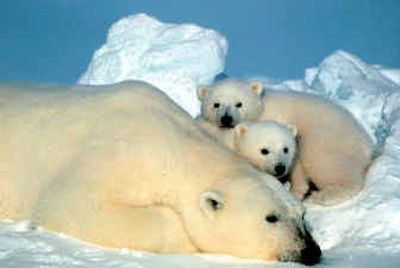
Environmentalists argue that while new technologies have reduced the drilling footprint, ANWR’s coastal plain still would contain a spider web of pipelines that would disrupt calving caribou and disturb polar bears, musk oxen and the annual influx of millions of migratory birds.