
A change of view
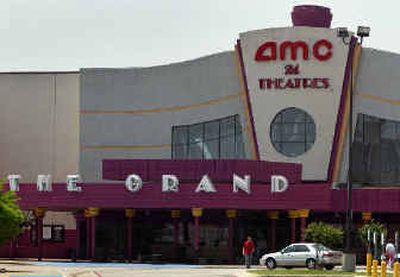

OLATHE, Kan. — It’s a Saturday night in suburban Kansas City and Wayne Sutter and his family are waiting outside the AMC Studio 30 megaplex to see “XXX: State of the Union.”
The giant theater — its spotlit facade can be seen on the highway a half-mile away — anchors a surrounding shopping center, attracting people with virtually every major commercial film currently playing, many on multiple screens.
“It’s nice to come here and have all the variety in one place,” Sutter said.
His wife, Bridgette, added that they don’t really have a choice.
“More than anything, that’s all that’s around where I live, the big theaters,” she said.
While it seems as if gigantic movie theaters have been with us forever, the megaplex theater — defined as having 14 or more screens and modern amenities like stadium-style seating — turns 10 years old this week.
AMC Entertainment Inc. opened the first, the Grand 24 in Dallas, on May 19, 1995, ushering in a new concept that used its scale to change how movies are shown. Ticket prices and audience expectations have gone up in the 10 years since, and megaplexes now face problems of their own.
The idea was to match the successful Big Box stores sprouting across suburbia, said Peter Brown, chief executive officer of Kansas City-based AMC, which now operates 229 theaters, 77 percent of which are megaplexes.
“It might make some sense to think of the movie theater as a superstore of entertainment,” said Brown. “It was not just bigger, it was better. It was a better mousetrap.”
Improved facilities and the ability to watch whatever movie they wanted when they wanted it brought people through the door and bulked up Hollywood’s grosses. Over the last 10 years, the number of tickets has grown 19 percent to $1.53 billion last year and annual box office receipts have blossomed 76 percent to $9.53 billion, according to the National Association of Theater Owners.
Anthony DiClemente, an entertainment analyst for Lehman Brothers, said the key was giving theater owners a huge number of slots to show movies.
“What was wrong with the multiplexes was you still had a situation, even with six or eight screens, where you couldn’t show movies on more than one screen,” DiClemente said. “That meant that on Friday and Saturday nights, you were still having sold-out shows. That was the impetus behind the megaplex: to satisfy demand at its peak.”
The megaplex has also contributed to the average ticket price increasing $2 over the last 10 years to $6.21. But National Association of Theater Owners president John Fithian said many things went into that, including increased costs for renting films from studios.
“When you offer consumers a better theater experience, that cost goes into the mix, but it certainly is not the only factor,” Fithian said.
The megaplex hasn’t always been good to the theater industry that spawned it. After the Grand 24 opened, most major theater chains raced to build their own megaplexes or retrofit older theaters, racking up huge construction costs. Most of the industry’s main players filed for bankruptcy in the late 1990s, leading to widespread consolidation.