
Basement 101
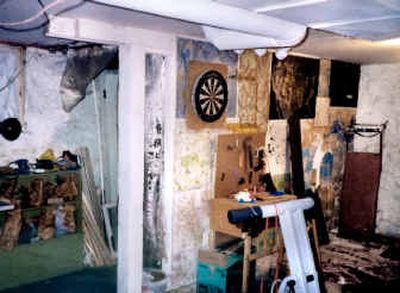
At first glance, the dark basement of Dan Gore and Mary Miller’s South Hill home purchased in 1986 was a poor candidate for remodeling.
Low-slung pipes and ductwork hanging a mere 5 feet above the floor, crisscrossed the ceiling; a stone foundation, damaged by years of water seepage; and an active and abundant spider population made the basement an unfriendly space that was downright scary.
The main level of the 1911 craftsman bungalow is warm and inviting. The interior is filled with family heirlooms, including a circa 1800 secretary that dominates the living room, worn leather books, and plush, comfy, furniture. Both Gore and Miller are accomplished musicians. Miller plays guitar, piano and upright bass, and Gore plays banjo and mandolin. He heads up the “Spokandolin” mandolin ensemble, and they both play in The South Hill Ramblers, a bluegrass band. Their son plays the fiddle.
The couple’s desire to add a family room – a room that would also function as a space to use and store the musical instruments that are so much a part of their lives – without significantly altering the lines of the house left them with only one option: a basement re-do. Or, in this case, a basement rescue.
In 1999, when an inheritance from Gore’s grandmother made the renovation possible, they embarked on the ambitious plan to convert the basement into a family room, guestroom, bathroom and workshop. Their first call was to Scott Fish, the contractor who had helped them build a garage at the rear of their property.
“We had worked with Scott before, and we trusted him completely,” Miller said. They also worked with Spokane architect Thomas Angell to design a family-friendly addition around the constraints of the site.
First, the source of the water that seeped into the basement had to be located and corrected. “We wanted to be absolutely sure there wouldn’t be any water problems in the future,” Gore said.
The downward slope of the lot was re-graded and a new drainage system installed. The home’s foundation walls were repaired and waterproofed before the new interior walls were added.
Fish re-routed the plumbing, removed the ductwork and framed the new space. Each room included a window that would not only bring in natural light, but would meet code requirements for egress.
Since the plumbing and wiring were being updated, the couple decided to tackle a kitchen renovation at the same time. They replaced the kitchen cabinets, added a garden window to bring in more light and installed a new maple floor.
But it was in the finishing touches of the basement project that Gore and Miller were able to act on their commitment to recycling materials and maintaining the integrity of the house.
When he disassembled the original garage before the new structure was built, Gore saved each board from the interior and exterior, removed the nails, and stored them carefully. He then had each one re-planed and routed. The rough, vintage boards were then used as wainscoting along the hallway and to completely panel the new family room.
The windows and doors removed from the basement were re-used to build a garden house and play area for the couple’s son.
Architect Angell encourages homeowners to think about re-using material in any remodeling project.
“I always remind people that they don’t just live in a house, they live in a home,” he says. “When you reuse or refinish things to use again, you’re putting a personal investment of time and energy, a little of yourself, into it.”
One of the wide pine boards from the old garage’s interior was covered with pencil marks, dated 1916, listing the mileage and car maintenance of the physician who built the house. Gore installed that board on the den wall and placed on it a dedication to his grandmother, whose gift made the project possible.
Now, surrounded by old wood, wall-to-wall Berber carpet and vintage light fixtures, the formerly scary space is cozy and inviting. A gas fireplace sitting on a brick hearth in the corner of the room provides heat for the entire basement.
The guest room is known as the “Grandma Room” because it is furnished with pieces that originally belonged to the couple’s grandparents. The laundry room is bright and efficient. No more spiders and crumbling walls. The family room, furnished with rocking chairs, music stands and musical instruments, reflects the interests of a family that loves to play together.
For Gore and Miller, the fact that the project utilized so many materials that had originally been part of the house made it into a holistic renovation.
“We value our home for its past and for what it means to us,” Miller said. “In a way, we are who we are because of this house.”