
Grant will help irrigation district upgrade system
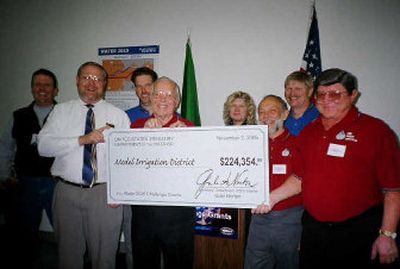
Model Irrigation District No. 18 received a $224,354 Bureau of Reclamation Water 2025 Challenge Grant, last week.
The grant was awarded to Model to help with $457,804 in expenses to upgrade its water system, improve monitoring of water usage and take steps toward conservation.
Jim Lahde, superintendent of the ratepayer-owned water district, said the grant enables the district to complete upgrades in one to two years, about half the time it would take if ratepayers bore the full expense.
“It saves the customers approximately $200,000,” Lahde said.
Updates include adding flow meters to monitor the amount of water pulled from the Rathdrum Prairie-Spokane Valley Aquifer. Flow meters help maintain appropriate levels of pumping, cutting down on occurrences of wells overfilling. New service meters also will be installed at individual households.
The district was formed in 1910. In 1950, the district had 100 customers. Today it serves about 2,300 homes, four Central Valley schools and several businesses in Spokane Valley. Its boundaries stretch south and east from Sixth Avenue and University Road.
Installing new service meters will cut the amount of time it takes to read meters from two weeks to a few hours, Lahde said, adding, some of the meters were so old and oddly placed that readers could hardly find them.
New meters will create a faster turn around time for billing, enabling customers to see how water usage impacts their bills. This spring the district is doing a rate study that will further explore conservation tier rates.
Lahde said the district’s three commissioners will then make a decision and new rates could be in place by June.
Although the grants typically go to larger water districts, the money could eventually translate into the district pulling less water from the aquifer, he said.
The savings could stay in the watershed or go to other systems, Lahde said.
“Our goal is to save five percent of our water pumping. That’s pretty ambitious.”