
Tips to keep you warm, safe this winter

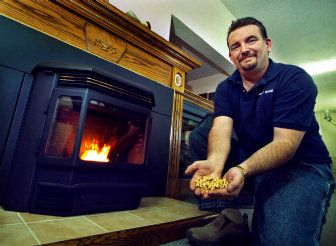
Cold weather drives people indoors in their effort to keep warm. With added time in the house, the risk of a fire increases during winter months. This risk is compounded by the fact that rising fuel costs are putting homeowners in the position of finding less expensive means of heating their homes, like wood-burning stoves and fireplaces. As a result, unsafe practices may be employed inadvertently, leading to the potential of a fire.
To safeguard your family and your home, follow these guidelines to prevent a fire.
Kitchen
The kitchen is the room of the house in which a fire is most likely to start. It makes sense, considering it’s where cooking takes place. One of the easiest ways to prevent fires from starting in the kitchen is to keep a watchful eye on the items you have in the oven and on the stove.
Don’t leave cooking food unattended, even for a short while.
Regularly inspect cooking appliances to make sure they are in good working condition. Toasters or toaster ovens should be free of excessive crumbs and have a power cord that is intact – not frayed.
Make sure ovens are clean inside and not full of food drippings or grease.
Keep items that could catch on fire, such as pot holders or towels, away from the range top.
If a fire does occur, act fast. Keep a fire extinguisher in the kitchen for this purpose. In the event of a grease fire, do not try to douse flames with water – it will only spread the fire. Place a pot cover over the flames and turn off the burner. If a fire ever gets out of control, call 911 and escape to safety.
Never use an oven to heat your home. Not only is it a safety hazard, it can be a source of potentially toxic fumes.
Heating Sources
The utility room or basement also houses equipment with fire-hazard potential. The furnace, with its lit pilot, can be dangerous if you aren’t careful.
•Keep combustible materials, like paint cans, gasoline or cleaning products, away from the furnace. Be sure all furnace controls and emergency shutoffs are in proper working condition. Leave furnace repairs to qualified specialists.
•Also, check the flue pipes and pipe seams that exhaust heat from the furnace to the outdoors. Are they well-supported and free of holes and cracks? Soot along or around seams may indicate a leak. Leaks from a furnace can be an added hazard – carbon monoxide. A silent killer, carbon monoxide is an odorless gas that slowly suffocates you. Installing carbon monoxide detectors throughout your home, in addition to fire detectors, is a wise investment.
•Wood stoves and fireplaces can provide a good deal of warmth, but open flames have the potential of spreading if proper safety precautions are not taken. Here are some tips to keep your heating source a source of warmth – not disaster:
•Be sure the stove or fireplace is installed properly. Wood stoves should have adequate clearance (36 inches) from combustible surfaces, and proper floor support and protection.
•Have the chimney inspected annually and cleaned if necessary, especially if it has not been used for some time.
•Do not use flammable liquids to start or accelerate any fire.
•Keep a glass or metal screen in front of the fireplace opening, to prevent embers or sparks from jumping out, unwanted material from going in, and help prevent the possibility of anyone getting burned.
•The stove should be burned hot twice a day for 15 to 30 minutes to reduce the amount of creosote buildup Creosote is a very flammable byproduct of combustion that can build up within the smoke pipe and chimney and then ignite, causing a chimney fire.
•Don’t use excessive amounts of paper to build roaring fires in fireplaces. It is possible to ignite creosote in the chimney by overbuilding the fire.
•Keep flammable materials away from your mantel. A spark from the fireplace could easily ignite these materials.
•Before you go to sleep, be sure your fireplace fire is out. NEVER close your damper with hot ashes in the fireplace. A closed damper will help the fire to heat up again and will force toxic carbon monoxide into the house. If synthetic logs are used, follow the directions on the package. Never break a synthetic log apart to quicken the fire or use more than one log at a time. They often burn unevenly, releasing higher levels of carbon monoxide.
Candles
Candles can provide light, ambiance and a subtle scent for rooms in your home. But, they can be potentially dangerous.
•Never leave candles lit while you are not home or leave them burning through the night as you sleep.
•Keep candles away from curtains, tablecloths or other loose fabrics that can be engulfed in flames.
•Don’t place candles where they can be knocked over by you or your pets.
•Rely on candleholders so that hot wax will not spill and damage your furnishings.
•Always double-check that candles and the matches that were used to light them are fully extinguished before leaving the house or retiring for the night.