
Suddenly, ARMs are dangerous
Second of three parts
DENVER — As soon as Lorie Limbaugh heard about a 1.25 percent interest rate on a mortgage loan, she figured it was too good to be true.
The bank teller and her husband, James, a plumber, met with a broker who said he would guarantee the rate for five years. Other companies which couldn’t match it.
Things progressed smoothly with their $275,000 adjustable rate mortgage until the rate began to climb — it’s now 6.25 percent — despite what they had been told. Today, they are facing a refinancing penalty and are unable to financially help a son who wants to attend a trade school.
“We can’t believe it,” said Limbaugh, who lives in Larkspur, Colo., about 35 miles south of Denver. “We were at 5.7 (percent). We should have stayed where we were at.
“Make sure you read everything that is given to you prior to signing anything,” she said. “Stay away from the ARMs because they are going to get you in the long run.”
Homeowners nationwide who obtained nontraditional mortgages when rates hit historical lows are facing similar challenges as monthly mortgage payments begin to rise. At the same time, the market is softening in some areas, preventing houses from growing in value as quickly as expected. Fold in rising consumer prices and it adds up to a pocketbook squeeze.
“It all leads to questions about how well-prepared consumers are, not only for the payment shock that might be lurking out there but for their monthly payment,” said Barbara Ryan, associate director of the Federal Deposit Insurance Corp.’s insurance and research division.
“I think these are marginal impacts that layer on top of each other, and it’s going to hit different people with different degrees of magnitude.”
The housing boom boosted the popularity of nontraditional loans, including adjustable rate mortgages — ARMs — that typically reset annually and are correlated to short-term interest rates. A second type is interest-only loans, which allow consumers to delay principal payments.
About 15 percent of American homeowners have ARMs, according to the Mortgage Bankers Association. The FDIC says alternative mortgages can be offered to buyers who may not have strong enough credit ratings to help them achieve lower monthly payments.
Industry experts have mixed feelings about whether the boom is beginning to ease. The East and West coasts, parts of Nevada, Florida and the Northeast are recording strong sales where jobs and populations are growing. Other areas have seen the rate of appreciation slow.
“I think that price appreciation will for the most part remain pretty solid for another three, four quarters,” said economist Celia Chen of Economy.com. “By the end of the next year into early 2007, we’ll see substantial slowing in house prices.”
“Housing prices, although they haven’t moved up rapidly, they still remain relatively high and I think that is an explanation of why we’ve seen such a significant use of those innovative mortgage products,” said Alan Bush, an FDIC regional manager.
“There could be some challenges for a portion of those folks that have adjustable rate mortgages as they re-price in a higher interest rate environment,” he said.
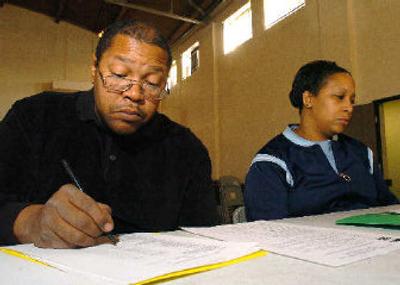
On a recent Saturday morning, Enie and Tony Brooks joined a small group at a foreclosure prevention workshop, hoping to hear a way to save their home of 17 years.
The couple obtained an ARM for $146,000 in 2003 and the rate has climbed from 7 percent to 9.5 percent — and could increase up to 11 percent. Today, their payment is about $1,200 a month.
“It’s already astronomical what we have to pay,” Enie Brooks said. “We’re not in foreclosure but, you know, paycheck-to-paycheck living. Things are getting rough.”
Enie Brooks, who works in office administration, said the couple is struggling to recover after her husband was out of work. “Right now we’re not in a position really to be able to refinance,” she said.
Their Aurora home is in an area poised for redevelopment so they are hopeful it will increase in value eventually.
“We’re just trying to hold onto it,” she said.