
Rules for tools
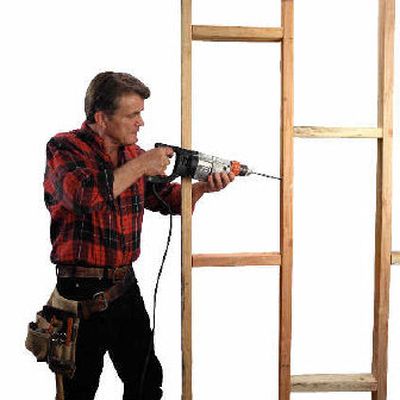
With the advent of home-improvement programming in addition to expensive contractor fees, many people are becoming do-it-yourselfers (DIYers) and taking on their own home repairs. The Hand Tools Institute, an association of North American hand tool manufacturers, reminds DIYers that hand tools come in various sizes, shapes and degrees of difficulty of use. They should only be used by following the manufacturer’s recommendations as listed on the instructions. Using a tool improperly or using one that’s not right for the job can damage the tool and work surface as well as cause serious personal injury.
Any tool, no matter how durable, can fail if it is misused. Metal-to-metal contact under pressure combined with a striking or twisting motion can result in broken metal fragments that can cause injury. To properly and safely use hand tools, you should:
• Follow the manufacturer’s instructions on the package.
• Wear safety goggles when working with hand tools. While some tools have more of a likelihood of injuring the eyes than others, it’s best to protect your eyes at all times.
• Keep all tools clean and in working order. Tools should be used away from excessive heat, and you should turn off all electrical currents near where you are using a tool.
• Use the tool only for the job it was meant to do.
• Buy several versions or sizes of the same tool to ensure you’ll have the right size for the job.
• Throw away damaged or overused tools.
Tool-Specific Safety
• Plastic-covered plier handles are for comfort, not for protection from an electrical current.
• Claw hammers are for driving and removing nails. Don’t strike other steel tools like chisels, punches or masonry nails with a claw hammer.
• Throw away a chisel or punch that is chipped.
• Always pull, never push a wrench. Never use power or impact wrenches on hand sockets. (Hand sockets have a bright or black finish.)
• Never use an axe to strike a wood splitting wedge. Instead, use a woodchopper’s maul or a sledge.
• Don’t use a screwdriver for prying, punching, chiseling, scoring or scraping. Screwdrivers should only be used to drive or remove screws.
• Never use an extension bar like a pipe to increase leverage on a wrench. You could break the wrench and hurt yourself.