
Lewiston area is an explorer’s dream
Clouds rested on rounded hilltops as we walked a paved riverside trail in Lewiston, Idaho, on a fall morning. Midweek traffic swished over the blue Interstate Bridge that links this city of 30,000 to the 7,300 residents in Clarkston, Wash., across the Snake River.
From these city names, you immediately know this region at the confluence of the Snake and Clearwater rivers was on the travel agenda of famed explorers Meriwether Lewis and William Clark – and thus the reason for the national Lewis and Clark traveling exhibit to be in Clarkston when we happened to come through on our way home to Oregon from Montana.
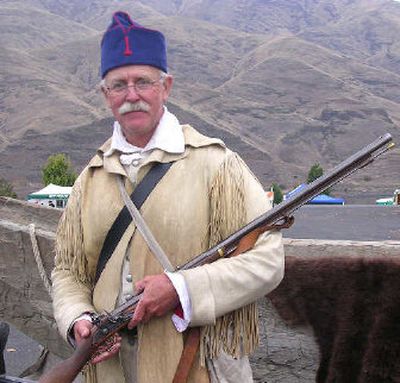
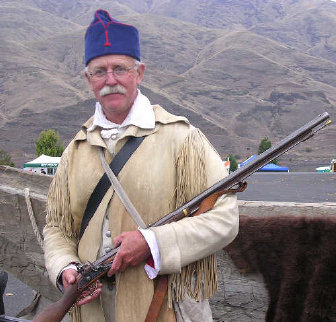
The exhibit presented the usual take on the Lewis and Clark story, bringing the journey’s details into sharper focus with living history presenters and artifact replicas.
But a small exhibit in Lewiston is where I found an interesting angle on the Corps of Discovery: Traveling with a dog was just as problematic for Capt. Lewis in 1805 as it is for me and my husband, John, in 2005.
Our rain jacket sleeves were tied around our waists by the end of our morning river walk in Lewiston. Humidity hung in the air, reminding us of our native South Carolina. A gray sky pressed down on us and the few runners and walkers we met. A lone sunflower plant waved in the occasional breeze and trees of red and gold lined the many parks along the river.
The Nez Perce tribes traditionally called this land home and lived here when they met Lewis and Clark’s entourage passing through on their way to the Pacific Ocean. This was just the beginning of people who would come, of course. Pioneers and miners flooded the area in the 1860s, motivated by land and gold, including a significant Chinese community whose history and religious traditions are preserved in a temple exhibit at the Lewis-Clark State College Center for Arts & History.
After our walk, John dropped me off at the Center for Arts & History while he took our dog, Kah-less, to a pet store. We had lost the “spiky ball,” one of Kah-less’ favorite toys. We must have lost it midsummer somewhere near Newport, Wash., but a look through two motel “lost and found” bins didn’t turn it up.
At the center, volunteer Jean Carol Davis greeted me at the door and exhorted me through an exhibit installation in progress for “Verses from the Sea” by Walla Walla artist Keiko Hara. The exhibit is open through Nov. 19.
The building we were in, I was told by Davis – who happened to be a descendant of a Whitman County pioneer family in Washington – was built by Idaho’s first millionaire, John P. Vollmer, in 1884. It’s one of the oldest buildings in Lewiston’s Historic District. Used first as a general mercantile and bank, it was donated in 1991 to Lewis and Clark College.
Upstairs a collection of murals by Nez Perce artist Sarah Penny re-creates scenes of Nez Perce life as it would have been when Lewis and Clark explored the West. The self-taught artist drew upon tradition and memories of her elders to paint women bent in a field digging camas bulbs, people working in a winter encampment along the river, a circle of women playing a game on a mat and other images for “The Nez Perce: Since Time Immemorial.”
From there I moved on to an amusing exhibit of chainsaw carvings based on journal entries that mentioned Meriwether Lewis’ dog, Seaman, a Newfoundland he picked up as an impulse buy while in Pittsburgh. Lewis paid $20, a month’s wage at the time, for the hound.
The explorer was probably proud of his purchase when clever Seaman proved himself a strong hunter. The dog chased and drowned deer for food in the river. But, during a scouting trip in high temperatures, Seaman slowed things down when he had to be taken back to the nearest creek to cool off. (Searching for water access is a regular challenge for us when traveling with Kah-less in the summer.)
For lunch, we chose a restaurant said to be a local college hangout: the Main Street Grill, 625 Main St. Baseball posters and pictures from Lewis and Clark College games filled the restaurant’s tall walls. The menu offered the burgers and fries you would expect at a place like this, but also had updated items in the form of salads and wraps.
On our way out of the area, we stopped in Clarkston at the tents of the national Lewis and Clark Bicentennial Commemoration traveling exhibit, “Corps of Discovery II: 200 Years to the Future.” Coordinated by the National Park Service, the exhibit is following the Lewis and Clark Trail, and recently entered the states of Washington and Oregon. (Check the Web site at www.nps.gov for schedule and locations. Admission is free.)
Several visitors gazed at collages of photos, letters, drawings and maps printed on large screens in the main exhibit tent as they listened to a narrator’s voice coming out of an audio device. Living history presenters in buckskins and period costumes, some from other cooperating government agencies and organizations, are also part of this on-the-road interpretive show.
Outside the tent Steve Morehouse, a longtime employee of the Bureau of Reclamation at Clark Canyon Reservoir in Montana, stood beside his 1,500-pound canoe. His eyes widened as he shared his enthusiasm for history.
With the traveling exhibit, Morehouse spends his days talking about the past and cooking up grub for folks to sample. He lifted a day-old cooked beaver tail from his canoe for the small crowd who had gathered around him. Since it was a day old, he advised against ingesting it, but offered us corn kernels that tasted like commercially packaged Corn Nuts snacks.
Leaving the exhibit, we continued on the historic Lewis and Clark route, driving west on U.S. 12 toward our Oregon home. I riffled in the dog’s shopping bag to find a treat for him. John informed me he had no luck on his mission to find a new “spiky” ball.
No matter, Kah-less is more interested in batting an old rock around that he found on his own trail of discovery in the Inland Northwest.