
Offering a fresh option
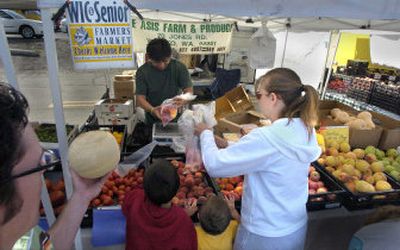
Peaches and peppery arugula, huckleberries and habaneras, corn and cantaloupe are all piled high.
Bethany Rafter comes to the Spokane Farmers’ Market on Second Avenue every chance she gets to buy fresh produce for her family; her husband loves the carrots, and she can get vegetables and fruit for her young child.
“I like that I can get things besides my milk and eggs. I went to the store for basics yesterday, and it was $60,” Rafter said.
Helping the 21-year-old Spokane mother is a once-endangered subsidy program supplying free nutritional education and money for low-income families to spend on the market’s bounty. A similar program provides the same benefits for the elderly.
Market organizers and community activists sought to spotlight the program this week by honoring state Senate Majority Leader Lisa Brown, D-Spokane, who is credited with sparing the program from the budget ax. This year the WIC (Women, Infants and Children) Farmers Market Nutrition Program and the Senior Farmers Market Nutrition Program were threatened after some federal funds were cut. Brown was able to secure funding in the 2005 legislative session to keep them running at previous levels of service.
The local WIC program, which provides $20 seasonal vouchers to more than 10,800 eligible individuals, has a strong presence at the Spokane market, which also benefits from the spending.
Together the statewide programs have pumped more than $1 million into small farm operations that rely on farmers markets to sell their fruit and produce.
“It’s been great seed money for the market,” Jeff Herman, Spokane Farmers’ Market council president, said Wednesday. “The market has grown by 50 percent each year. This WIC thing has been good for all of us: bringing business to the market regularly, stabilizing income to the market and bringing fresh produce to these people.”
Brown, who was introduced to the small crowd as a longtime supporter of the programs, said the political process works best when people believe in what they advocate.
“It’s a win-win-win situation when mom and babies can get nutrients and seniors get fresh food and local farmers benefit,” she said.
Diane Reuter, the Spokane market’s coordinator, said she felt the same way about the programs.
“The vendors think it’s great, and the older folks, they remember fresh produce, so they’re thrilled,” she said.
Many of the market booths sell organically grown products, and all vendors must grow their own goods.
“This market is all farmer-grown. This all about food – no crafts – and you have to grow it if you want to sell it,” Herman said.
Reuter and Herman both said they expect growth in the program and in the market for fresh foods.
“I think people are becoming a little more aware of what people are putting in their bodies,” Reuter said.