
Pair of dogs offer warm, loving therapy

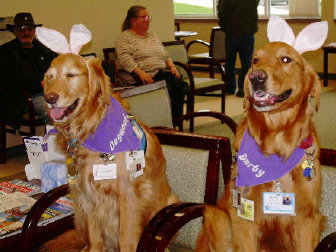
Skip Partridge has trouble speaking. So do his two buddies. But when they’re together, they have no problem making ailing Spokane residents feel a lot better.
Partridge was working as a Spokane drug and alcohol counselor in 1987 when he suffered the first of four strokes. A second stroke a year later left him permanently disabled. At 44, he had to learn to walk again, and still suffers from aphasia, an impairment of the ability to use words.
So he enlisted the help of his two friends, Dagwood and Darby, who speak the universal language of warm eyes and wagging tails.
Partridge had learned about animal-assisted therapy while in the hospital, and trainer Barb Gordon helped him teach his two golden retrievers.
“Skip has a childlike ability to relate to the dogs. He’s simple and direct,” Gordon said. The dogs are now certified by Delta Society, an organization dedicated to improving human health through service and therapy animals
For the past several years Partridge and his dogs have been visiting area hospitals and schools. The dogs perform an amazing variety of tricks, but the most valuable service they provide is the love they lavish on those they visit.
Twice a month, they travel to Hospice of Spokane, where a portrait of Dagwood and a teenage patient hangs in the lobby. Darby greets visitors with a warm doggie hug. Gently leaning against their legs, he waits for the petting and praise that’s sure to follow. Trina Poppens, coordinator of the animal assistance activity program for Hospice, says these visits are great therapy for the staff as well as the patients.
After seeing their friends in the office, Partridge and the dogs make home visits with Poppens to Hospice clients. One patient told Poppens these visits made living with her illness bearable.
At Cancer Care Northwest, Partridge and the dogs are a welcome diversion in the chemotherapy room. Each week when they enter the room, eyes light up. Partridge uses sign language to give commands to Dagwood and Darby. After the dogs perform a few of their tricks (praying is a huge crowd pleaser), Partridge takes them around the room.
“Skip and the dogs provide an outlet to think about something else besides cancer and chemo. Their visits are a huge gift,” said patient Susan Cerutti-Jensen.
Not all people are dog lovers. Dagwood and Darby have an innate sense of who will welcome a doggie kiss and who would rather watch from across the room.
Partridge and his dogs are also favorite guests at Shriners Hospital for Children. At a recent visit to the recreation room, patients from Mexico and Canada squealed and clapped as the dogs found Partridge’s keys and a hidden ball. They took turns tossing the ball for the dogs and each child got a chance to stroke Darby’s silky ears. Children who aren’t able to come to the rec room get bedside visits.
Tomie Zuchetto, recreational therapy manager at Shriners, says when the dogs enter a room they immediately become the center of attention. Parents, patients and staff get a welcome reprieve from stress.
Partridge’s love for his dogs is evident. They’re immaculately groomed and cared for. He describes them as “awesome.”
In addition to his volunteer work with Dagwood and Darby, he works part-time as a caregiver for Life, a care facility for people with profound disabilities.
At 63, even after four strokes and a heart attack, Partridge continues to maintain his busy pace. When asked why, he haltingly says, “I love it. Dogs love it.”
Through Dagwood and Darby, Partridge has found his voice.