
U.S., France agree on plan for cease-fire in Lebanon
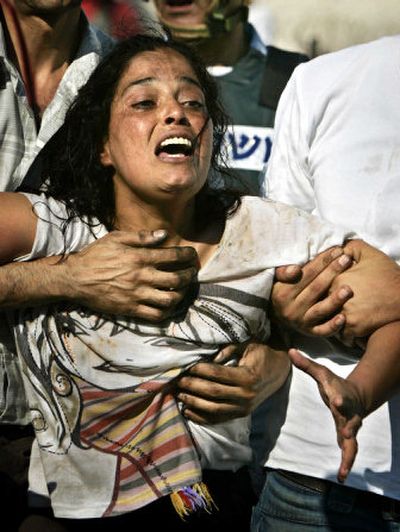
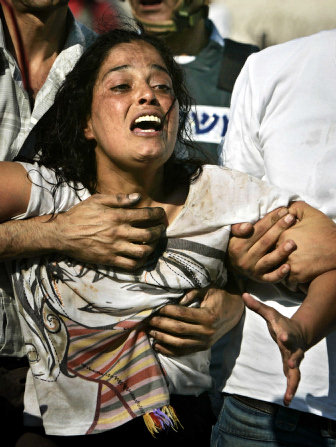
UNITED NATIONS – The United States and France reached agreement Saturday on a draft Security Council resolution calling for “full cessation of hostilities” between Israel and Hezbollah and outlining initial steps to end their 25-day conflict.
But senior Lebanese and Hezbollah officials immediately challenged the terms, while U.N. and European officials said major changes would almost certainly be needed before it is put to a vote this week.
The first of two anticipated resolutions calls for the fighting to stop in place – for Hezbollah to end all attacks and Israel to halt offensive operations – but it does not call for Israeli troops to withdraw from Lebanon for now. The proposal also calls for immediate humanitarian aid for Lebanon and for the beefing up of the 2,000-strong U.N. force already there to ensure that no new arms are smuggled into the country, a provision aimed at containing the Shiite militia.
The joint resolution, which followed days of intense diplomacy, lays out ideas for an eventual permanent cease-fire that would include the withdrawal of Hezbollah and Israeli combatants from a buffer zone between Israel’s northern border and Lebanon’s Litani River, the disarming of Hezbollah, and the deployment of an international stabilization force in Lebanon. The new force, likely to be headed by France and to include at least 10,000 troops from various nations, would not be authorized until Lebanon and Israel have agreed to a formal cease-fire.
The terms would be formalized in a second resolution if hostilities come to a halt – a big if, said U.N., European and Arab officials.
If passed by the council, the resolution would set the stage for intensive U.N.-backed diplomacy to rally support for a peace plan intended to help Lebanon regain control of its territory for the first time since civil war erupted there in 1975. But diplomats cautioned that they face an uphill battle to persuade Hezbollah and its key foreign backers, Iran and Syria, to release their grip on a strip of Lebanon that has enabled them to attack Israel for more than two decades.
After a heated four-hour cabinet session, the Lebanese government put off a formal response to the resolution until a final version is put forward. But in a sign of the challenges ahead, cabinet ministers, including members of Hezbollah, indicated stiff resistance to the terms. “We will abide by it on condition that no Israeli soldier remains inside Lebanese land. If they stay, we will not abide by it,” said Mohammed Fneish, the energy minister and a Hezbollah member.
Prime Minister Fouad Siniora indicated Hezbollah’s views on the resolution would prevail. “We have rights,” he declared as he walked into the cabinet meeting, “and we are going to defend those rights.”
Any decision to embrace a resolution worked out in New York without Hezbollah would risk splitting a fragile government and further strain already tense relations among Lebanon’s 17 Shiite, Sunni and Christian communities.
Israel’s ambassador to the United States, Daniel Ayalon, said Israel is “studying” the proposal. It is particularly concerned with terms for the release of two soldiers whose abduction on July 12 sparked the hostilities, which have killed at least 575 Lebanese and 79 Israelis.
The resolution emphasizes the “urgent” need for the “unconditional” release of the Israelis, and is “mindful” of the sensitivity about Lebanese prisoners detained in Israel and encourages efforts to settle their status. This was one of two issues on which the Lebanese government had asked for more deliberate language to give it leverage to persuade Hezbollah to cooperate and eventually disarm.
The other issue is Shebaa Farms, a historically Syrian area that has become the last disputed border area on a corner that also abuts Lebanon and Israel. The resolution calls for U.N. Secretary General Kofi Annan to develop proposals to delineate borders between the three countries. Lebanon had hoped for the more specific language on Shebaa Farms because Hezbollah has justified keeping its weaponry on grounds of fighting Israeli occupation in the area dating from its capture in the 1967 war.
The United States, France and Britain – the three key parties to the draft – hailed Saturday’s agreement as a crucial first step in halting a conflict that has inflamed passions throughout the Islamic world and threatens to engulf the region. They called for a meeting today of experts from all 15 members of the Security Council to work on details.
“This is a first step. There is still much to be done. But there is no reason why this resolution should not be adopted now and we have the cessation of hostilities literally within the next couple of days,” British Prime Minister Tony Blair said in a statement.
The Bush administration is working behind the scenes to win support, hoping for the proposal to be put in final form Monday and a vote to be held Tuesday. “Neither side is threatening to walk away. Both sides have questions,” a senior U.S. official said Saturday on the condition of anonymity because of ongoing diplomacy. “It’s inevitable that there will be changes. This is a product of three countries; now we have 12 more to go. … But we think the structure is right.”
U.S. officials hope to reverse the escalating momentum and win over the Lebanese with terms to end the punishing air campaign, creating a “quiet period” to allow aid to reach more than 750,000 displaced in Lebanon.