
‘07 Rabbit: A bunny to love
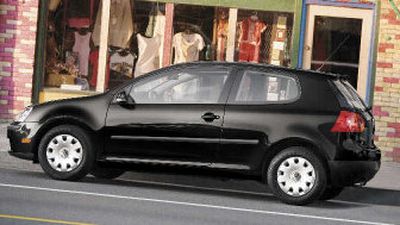
If any automaker understands the power of personality, it’s Volkswagen.
It fashioned its global reputation on the broad shoulders of an odd little car known as the Beetle and gave a generation an icon in the form of the Microbus.
Given that history, it’s fitting the company would call on a familiar and beloved nameplate to revive its entry-level fortunes.
Yep, the Rabbit is back, and with a new bounce in its step.
The 2007 Rabbit replaces the Golf nameplate in the United States and Canada. Aggressively priced and packing a host of trickle-down technologies borrowed from pricier relatives, the Rabbit is the first VW in years to present a real challenge to the Asian vehicles that have laid claim to the bottom end of the market.
Available as a two- or four-door hatchback (from $15,620 and $17,620, respectively, including destination), the Rabbit lives up to its old reputation as a fun-to-drive, economical and sophisticated choice for first-time buyers.
Despite its bargain-basement price tag, it’s a little slice of first-class German engineering.
A responsive 150-horsepower, five-cylinder engine can be wired to either a five-speed manual transmission or an optional six-speed Tiptronic box with Sport and manual-shift modes.
The sophisticated, fully independent suspension produces a ride-and-handling package that cars costing thousands more should envy. It’s not the cutting-edge experience purists demand, but everyone else will be pleased with its taut yet comfortable road manners.
Air-conditioning, power windows and mirrors, keyless entry and a 60/40 split-folding rear seat are standard on both variants, while the four-door adds a premium audio system with a six-disc CD changer, eight-way manually adjustable front seats (versus six-way in the two-door), heated front seats, rear center armrest, upgraded cloth upholstery and body-color bumper strips/side moldings.
On the safety front, all Rabbits come standard with anti-lock brakes, traction control and a full complement of airbags, including an industry-first set of optional rear-seat side-impact thorax bags.
Volkswagen has not been immune to reliability issues in recent years, but the company has never scrimped on the quality of materials, especially those on the inside. In its category, the Rabbit’s cabin sets the standard with upscale design, pleasing surfaces and hearty switchgear. Firm, supportive and well bolstered, the seats alone are worth the price of admission; they adjust in all the ways needed to create a comfortable, efficient driving position.
The sturdy steering wheel tilts and telescopes, which aids in the effort to get comfortable. We’ve driven more than one entry-level car lately that left us feeling too far from the steering wheel.
An electro-mechanical steering system produces good road feel and is quick and accurate. Standard, 15-inch all-season tires provided abundant grip on rain-slicked roads at the Rabbit’s launch in Pennsylvania.
Volkswagen hopes the Rabbit connects with a new cadre of youthful enthusiast, which seems like not a far-fetched notion. One step up on the family tree, the more expensive GTI contends with Honda’s Civic Si for top pocket-rocket honors, and the Rabbit slots in neatly below.
This bunny has a great personality and won’t have any problem finding – and keeping – a loving home.