
Japanese shrine casting shadow over election
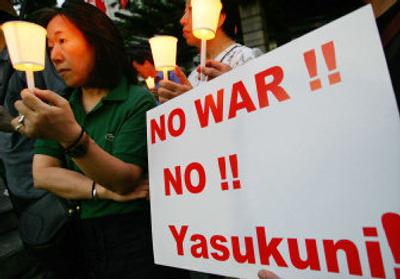
TOKYO – Its name means “peaceful nation,” but the Yasukuni shrine to Japan’s war dead generates a lot of rage. Asian neighbors attack it as a promoter of militarism, Japanese have filed a slew of lawsuits against official visits there, and the U.S., Japan’s main ally, finds its take on history disturbing.
Now it is becoming an issue in the race to succeed Junichiro Koizumi as prime minister, and the heat level may rise sharply this week if Koizumi follows through on a pledge to pray there next week on Tuesday’s anniversary of Japan’s World War II surrender.
Protesters marched for a second straight day Saturday to rally against the shrine, demonstrating building emotions ahead of the anniversary.
Koizumi has gone to the shrine five times since taking office in 2001, but never on the emotionally charged date of Aug. 15.
Each visit has set off rumbles among Japan’s neighbors, especially China and Korea, which bore the brunt of 20th century Japanese aggression and colonization. The reason: the 2.5 million war dead commemorated at Yasukuni include the soldiers who fought in these wars, as well as seven executed war criminals who designed and executed Japan’s imperialist conquests.
While Japan after World War II swore off war and embraced a pacifist constitution, Yasukuni never abandoned the idea that the country was waging a bold struggle for Asia against Western imperialism.
“There is no uncertainty in history. Japan’s dream of building a Great East Asia was necessitated by history and it was sought after by the countries of Asia,” the shrine declares on its Web page.
While Yasukuni has long been the redoubt of aging war veterans, crusty militarists and ultra-rightists, its priests are now actively recruiting support among the young, many of whom are tired of bearing the war guilt of their grandfathers.
With controversy has come a big increase in visits to the shrine, built 137 years ago to promote imperialism and glorify death in battle and managed by the military through the war’s end.
It logged a postwar record 205,000 visitors praying for the war dead on Aug. 15 alone last year. Attendance at the shrine’s war museum – which depicts Tokyo’s military conquest of Asia as a noble enterprise – also doubled in 2005 from the previous year to 360,000.
Koizumi’s visit last year was carefully calibrated to fend off the constitutionality question. Unlike his past four trips, he wore a suit rather than traditional Japanese dress or a tuxedo, threw coins in a donation box and stayed out of the inner shrine in a probable nod to the constitutional separation of state and religion.
Still, Yasukuni and other issues have brought relations with China and South Korea to a postwar low. Neither will hold summits with Koizumi, and both are urging his successor to shun the shrine. The U.S. is in a bind: It welcomes Koizumi’s moves to make Japan a bigger military force in the region, but can’t ignore the weight of the past. U.S. Ambassador Thomas Schieffer says the shrine’s museum – many of those names are of soldiers who killed Americans – is “very disturbing.”
The shrine issue splits Japanese opinion down the middle and is figuring in the race to succeed Koizumi when he steps down next month.
The front-runner and hawkish heir apparent, Chief Cabinet Secretary Shinzo Abe, says he supports prime ministers visiting Yasukuni and has not denied reports that he made his own secret pilgrimage there in April. His rival, Foreign Minister Taro Aso, is more circumspect. He wants to transfer control of the shrine from its Shinto priests to the state, and then have Parliament decide who should be honored there.