
‘Tree Lady’ branches out
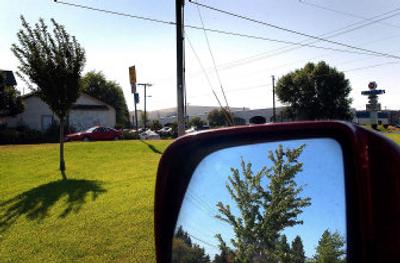
In 1999, Spokane’s 57th Avenue was widened and there was no allowance to replant the street trees that had to be removed. That bothered Moran Prairie Neighborhood Association member Carrie Anderson. Anderson felt that if there were trees there before, there should be trees replanted to replace them.
So she decided to do something about it. In 2000, working with the Spokane Audubon Society, she received a grant from the Washington Department of Natural Resources’ Urban and Community Forestry Program to purchase and install new trees along 57th.
Thus began the advocacy campaign of the “Tree Lady” for Spokane’s urban forest that has challenged the community to respect the urban forest’s role as an important part of our quality of life.
On Aug. 9, Anderson’s efforts were recognized when she received the Urban Forest Stewardship Award from the Washington Community Forestry Council at its quarterly meeting in Spokane Valley.
The award recognizes individuals in Washington state who have demonstrated exceptional leadership, creativity, cooperation and stewardship in urban and community forestry. Anderson is being recognized for her outstanding leadership in Spokane on urban forestry issues and for the many projects she has undertaken to enhance the urban forest in Spokane.
“Carrie has held the (Spokane) political leadership’s feet to the fire when it comes to the protection of the urban forest,” says Jim Flott, a member of the Forestry Council and a Spokane-based community forestry consultant. “She has promoted awareness and education of the value of our urban canopy.”
The Moran Prairie Trees Project evolved into the Trees for YOUR Neighborhood Project in 2002. With funding from the New Priorities Foundation and assistance from the Master Gardeners, Anderson began a program to plant trees in the yards of low income families around the city. In turn this project spawned a tree selection guide put together by the Master Gardeners to help people choose the right tree for their setting.
To help other people organize tree plantings and take care of the trees, Anderson then produced The Adopt a Tree for Your Neighborhood Guidebook with funding from a Forest Service Community Forestry Assistance Grant.
In 2004, Anderson’s guidebook and program received a national education award from the National Arbor Day Foundation.
Under the umbrella of the Lands Council, Anderson formed the Urban Forest Council to coordinate citizen-driven urban forest projects. One of the first projects was the creation of the Spokane Tree of the Year designation. Since 2003, Spokane’s mayor has proclaimed a tree well-adapted to the region as tree of the year. Ponderosa pine and Douglas fir were the first trees on the list because Anderson feels in the long run our native trees will stand the test of time and climate change.
What’s in the future of Spokane’s urban forest? Anderson says she will continue to keep asking the why questions about how the city relates to its urban canopy, “and I will continue to ask why until I get a satisfactory answer.”