
Dworshak bass feast on kokanee
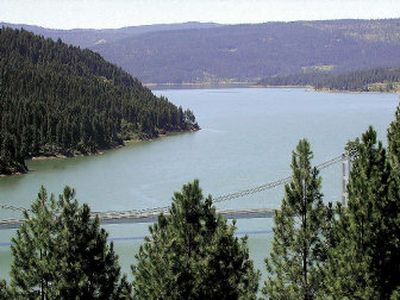
Kokanee in Dworshak Reservoir are plentiful and small this year and those who like to fish for the landlocked salmon are grumbling. But what is bad news for blueback anglers is proving a blessing and a boon to bass fishermen.
Smallmouth bass are gorging on the millions of kokanee fry and even some of the small adults in the reservoir. The plentiful food sources are allowing them to grow fat and long.
Reports of 4-, 5-, 6- and even 7-pound bass being pulled from the reservoir with unusual frequency have been racing through tackle and bait shops from Orofino to Lewiston. The bass are so big some anglers are predicting the 11-year-old state record for smallies could soon fall.
“This year it really got good. Next year it will be good. They’ll get the state record out of there again,” said Steve Ryan, a tournament bass fisherman from Lowell, Idaho.
Dan Steigers of Juliaetta, Idaho, set the state record in 1995 when he caught an 8-pound, 5-ounce smallmouth from Dworshak. Ryan said he’s caught plenty of 6-pounders from the reservoir this year. He recently won a tournament there with a five-fish limit that weighed more than 25 pounds. His biggest fish tipped the scales at 7 pounds and the smallest was close to 4 pounds.
“There is a lot of big bass in Dworshak Reservoir right now,” he said. “It’s fun fishing.”
Ed Schriever, regional fisheries manager for the Idaho Department of Fish and Game, confirmed that plentiful and small kokanee are at least partly responsible for the increase in large bass at the reservoir.
Summer drawdowns also play a role, he said, and the elimination of size limits on bass a few years ago may have helped.
Both bass and kokanee fisheries at the reservoir have been on a slow-moving roller coaster over the past 10 to 15 years. When Dworshak was a new reservoir it was very productive and several species of fish thrived. As it aged, the productivity deteriorated and fish suffered.
In the early 1990s, the federal government began to flush water from Dworshak to aid juvenile fall chinook. The falling reservoir levels were bad for redside shiners, a bait fish on which bass feed. Forage for smallmouth became scarce and was largely limited. Average bass size shrank to about 8 to 9 inches.
The summer drawdowns also interfered with the tail end of smallmouth bass spawning. That led to fewer total bass. But those that were left had less competition for food and fish sizes began to improve.
“Drawdowns have a negative effect on (bass) reproduction, but that is not necessarily a bad thing for the fishery,” Schriever said. “We may end up with more quality bass in the fishery but have fewer total bass.”
When the department dropped size limits on bass it also made more food available for the bass that remained.
Kokanee populations have also fluctuated at the reservoir. This year kokanee numbers are high but the average size of the fish is down. Winter drawdowns at Dworshak that were more common in the 1980s and early 1990s often sucked kokanee out of the reservoir.
Kokanee hang out near the dam in the winter but in the summer they are distributed throughout the reservoir. When the government began drawing the reservoir down during the summer to help fall chinook kokanee populations grew.
Last year and this year fisheries biologist saw more kokanee fry in the reservoir than ever before.
“If you are something that eats fish in Dworshak, last year and this year were good,” Schriever said.
And if you are someone who likes to catch bass in Dworshak Reservoir, this is shaping up to be a pretty good year.