
Trip to father’s village a time to learn for senator
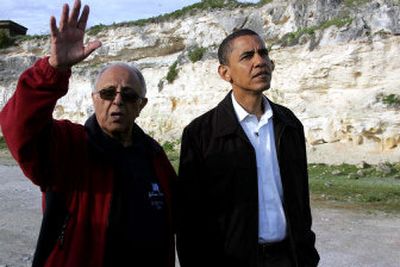
CAPE TOWN, South Africa – The last time he traveled to Africa, he wore a backpack and walked with anonymity. Fourteen years later, he arrives with a title, an entourage and such fanfare that some roads in his father’s village have been freshly paved in his honor.
Sen. Barack Obama, D-Ill., arrived here Saturday to begin a two-week, six-nation sweep through Africa, a journey steeped in political significance and personal reflection as he returns to the continent of his late father for the first time as a U.S. senator.
Amid the jubilation, Obama worried his visit had mistakenly raised expectations that he could shower prosperity on a Kenyan province that has long been awash in poverty.
“There is a sense that somehow I can deliver the largesse of the U.S. government to that region,” he said in an interview last week as he prepared for his trip. “And I can’t.”
Instead, Obama said he hoped to learn about the troubles – and the prospects – of Africa as he travels from South Africa to Rwanda, Congo to Kenya, Djibouti to Chad. By shedding light on his findings, he said he hopes to illuminate Africa’s importance to the world and to the war on terrorism, not to mention its perpetual need for aid.
While countless celebrities have sought to highlight the problems of Africa, Obama’s authentic tie to the continent presents a unique opportunity for an American senator. Not being bashful about promoting his trip, he sent an e-mail alert to thousands of followers last week, asking them to tune into his own dispatches he intends to post on his Web site.
“Obviously, I’ve got a personal connection to Africa that makes the trip special,” Obama said. “I also have a deep, abiding interest in what happens to the African continent as a whole.”
While it’s hardly unusual for members of Congress to take fact-finding trips to Africa, the visit by Obama has taken on increased meaning: He is the only African American currently in the U.S. Senate and has a grandmother and a host of relatives in Kenya.
On Saturday, the village of Kogelo was abuzz with anticipation. Obama’s picture appeared on the front page of the newspaper – again – and family members gathered to sort out details for next weekend’s reunion.
“Everybody in town knows that he is coming,” the senator’s step-uncle, Said Hussein Obama, declared Saturday in a telephone interview from Kenya. “He is not just a member of the family, but someone who is high up the political ladder in the U.S.”
Preparations have been under way for weeks, he said, and a team of American Embassy officials was completing its final stages of planning for the trip.
A member of the Senate Foreign Relations subcommittee on Africa, Obama stressed that the homecoming was only a small portion of his visit. He said he hoped to learn more about the spread and treatment of AIDS, bird flu and other diseases, in addition to genocide in the Darfur region of Sudan.
While Africa is hardly at the forefront of the long list of U.S. foreign-policy concerns, Obama said the continent should not be overlooked, particularly as a potential breeding ground for terrorism.
“Unfortunately, our foreign policy seems to be focused on yesterday’s crises rather than anticipating the crises of the future,” Obama said. “Africa is not perceived as a direct threat to U.S. security at the moment, so the foreign-policy apparatus tends to believe that it can be safely neglected. I think that’s a mistake.”