
Slavic residents warm to health care
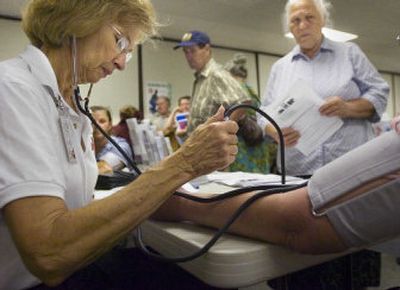
Even from the hallway, the buzz of Russian voices and the aroma of skillet stroganoff suggested that Monday’s Slavic Health Fair was a success. And the scene inside the conference room confirmed that organizers are making inroads with a community notoriously suspicious of medical care.
“See? We are busy!” said Tatyana Bistrevsky, program coordinator for the Washington State University Extension Office, which sponsored the third annual event.
Dozens of immigrants – older women and young mothers, teenagers and grandfatherly men – crowded into chairs or waited patiently in line for information about subjects including oral health and asthma, high blood pressure and breast cancer.
Yelena Derevnyuk, a 51-year-old mother of six, came to Spokane nearly five years ago from Belarus.
She wanted to learn about health problems common among the 20,000 to 25,000 Slavic immigrants estimated to live in Spokane County.
One of the most serious problems is diabetes, Derevnyuk said through a teenage interpreter.
“She learned she should get physical exercise and eat more fruit,” said Olga Ageyeva, Bistrevsky’s 14-year-old niece.
Derevnyuk, a cook at Slavytich Slavich Buffet, said she will pay closer attention to the food she buys and how it’s prepared.
By noon, more than a dozen people had been screened for high blood pressure or tested for diabetes. Many more had received free toothbrushes, mouthwash and enough Russian-translated brochures to keep them reading for weeks.
It’s all part of a follow-up to a Slavic health assessment conducted last year by the Spokane Regional Health District. The study discovered some disturbing trends among local Slavic immigrants.
More than 40 percent, for instance, skipped seeing a doctor when they needed one. Nearly 50 percent have no health insurance. Nearly 40 percent of adults are obese, and nearly two-thirds eat fewer than five fruits and vegetables a day. The rate of diabetes is elevated for Slavic adults, and it’s almost twice as high among Slavic young people as the rest of the local population.
Compounding those health worries has been a reluctance to seek medical care, said Dr. Kim Thorburn, health officer for the health district.
“They come with a real fear and distrust of government,” Thorburn said. “They think the medication is worse than the infection or that it destroys their liver. That belief permeates the culture.”
Even Olga Ageyeva, who has lived in the United States since she was a toddler, agreed.
“In Russia, if they had diabetes or something, they wouldn’t care, they’d just go on,” she says. “They’re scared that the doctor would give them something that would make them worse.”
Gradually, however, that suspicion is receding, said Bistrevsky.
“It’s getting easier,” she said, noting that 200 people showed up at last year’s health fair and she expected a similar number Monday.
Bistrevsky, a vivacious Ukrainian immigrant, is a big factor in that outreach, Thorburn said. Bistrevsky has become a liaison and a trusted figure in the community, so if she holds a health fair, people come.
Newcomers appreciate direction from someone who exudes warmth – and who speaks their language, said Tatyana Lebedinskaya, 22, who helped translate Monday.
“Tatyana is very friendly, and it’s a pleasure to talk to her,” Lebedinskaya said.
Overcoming suspicion will allow local health officials not only to reach more people, but also to broach sensitive subjects. Thorburn said she’d like to increase attention to Slavic young people, who have higher rates of tobacco and alcohol use than their parents.
Increasing awareness and services to the growing Slavic community is a realistic goal, Bistrevsky said.
“Before it was more difficult to get people. Now they’re knowing that they can get help.”