
Weed-covered lots may be fire hazard

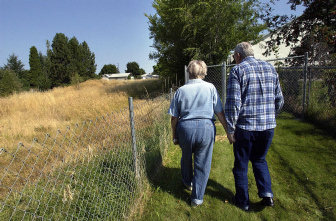
As the region’s foliage dries out and the news of wildfires drifts in, many people are looking nervously over their fences to weed-covered lots that could catch fire right next door.
“We are scared spitless,” said Chris Wyant, describing what she and her husband, Bill, see as a fire hazard in the empty lot that borders their quiet complex of apartments and townhouses in Spokane Valley.
Their building is close to the property line, and the couple, in their 80s, have asked numerous public officials to make the new property owner next door keep the weeds under control while he remodels the house.
“All the fires we’re having, you’d think they’d cut the stuff down,” Bill Wyant said.
Their concerns are not unique. Spokane Valley Fire Department officials receive 40 to 50 complaints in a given year, mostly during the summer and early fall.
“We have to have it in writing before we can take action,” said Fire Inspector Rick Freier.
Forms available at Valley fire stations ask for basic information about the property owners involved in the dispute and the land in question.
After it’s filed, an inspector will check out the situation within 10 business days, Freier said, and most situations are inspected within a week.
“I take every one of them seriously, but we have to prioritize some,” said Freier.
He handles the complaints within Valley Fire’s area as well as arson investigations and duties surrounding new subdivision approvals.
While most people can spot the fuels and fire potential of high weeds or piled-up debris, many don’t realize the limitations on what fire departments can make a property owner do to fix it.
“The sad thing with the fire code is you can be a fire hazard to your own property,” said Valley fire spokesman Bill Clifford.
State law doesn’t specifically address fire hazards for weeds. Safety measures can vary from fire district to fire district.
While many neighbors expect eyesores in their neighborhoods to be mowed completely, the law only requires land owners to eliminate threats to their neighbor’s fence or other structures. In many cases, that means mowing dried vegetation around the perimeter of a field.
That’s what the Valley Fire Department recently required next to the Wyants, but they said they don’t feel the mowed strip along the fence is enough.
“We’re at a dead end, really,” Chris Wyant said.
Firefighters are confident in the ability of cleared areas to stop flames or slow them down enough for fire trucks to get there, citing the narrow trenches they dig to contain brush fires.
“It doesn’t take a lot to isolate a fire to somebody’s property,” said Doug Bleeker, a deputy chief for Fire District No. 9, which serves a large unincorporated area north of Spokane and Spokane Valley.
His department received about two dozen weed complaints last year, he said.
Across the state line, Kootenai County Fire and Rescue has received 25 to 30 complaints so far this year, said Fire Marshal Larry Boatwright.
If weeds pose a hazard to neighbors, the department will require that the entire property be mown down or that a plowed, 3-foot-wide fire break be installed next to the property line.
While creating a fire hazard that endangers someone else’s property is a misdemeanor in both Idaho and Washington, fire officials said the vast majority of complaints are resolved with a letter or a talk with the property owners.
“Most people generally try to work with us,” Boatwright said. “They don’t really think about it.”