
Truancy center closure hurts

Last year Spokane Public Schools closed its truancy center to save money.
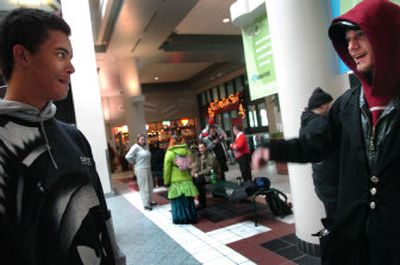
Since then, the number of juveniles loitering at places like the downtown bus plaza and outside schools has increased, along with the problems that go with it.
And while there is no proven link to the truancy center closure, juvenile crime is also up, as measured by the number of cases referred to the juvenile prosecutor’s office. The numbers had declined steadily from 1996 to 2004, Prosecutor Bob Jalovi said. “It’s hard to quantify, but I’m sure that it’s partly because of the center,” Jalovi said.
The Spokane Community Truancy Center was started in 1996 as a joint effort of the school district, Spokane police and city.
The two city police officers assigned to the truancy center, as well as the school district’s resource officers, picked up absentees and dropped them off at Havermale High School, where the center was housed.
Instead of wandering the streets getting into trouble, the students would stay there until the end of the day, or until a parent picked them up and returned them to school. If a student was not enrolled in school, officials would find them one. The center also served as a resource for social services, helping disaffected students reconnect with the school system.
“It was wonderful. It gave us a real platform to work from,” said Gary Cooper, one of about a dozen school district resource officers assigned to Spokane schools. “Now there is no enforcement.”
Eventually the city and police dropped out of the program because of budget constraints, school officials said.
In 2004, during a round of its own budget trimming, the school district closed the center, which cost about $100,000 and served an average of 1,000 students annually.
“We didn’t see that it was really making a difference in getting kids reconnected or keeping them in school,” said Nancy Stowell, associate superintendent for teaching and learning. “Really it was just a place for them to sit for a day. We believed it was more important for kids to be at school.”
Since January the district has been piloting a new truancy intervention program with money from a federal Safe Schools Healthy Students grant.
Each Monday a truancy review committee meets with 12 to 15 students at the East Central Community Center, said Suzanne Smith, facilitator for the new truancy board.
The committee, made up of school district staff, parents, drug and alcohol counselors, and others, comes up with a contract to help chronically absent students stay in school.
In turn, the district puts a hold on any court proceedings filed against the student under the Becca bill. Under that state law, schools must file a truancy petition in court for students who are absent more than 10 days. In some cases, if a student doesn’t return to school, an arrest warrant may be issued.
So far, the new committee has intervened in 300 truancy cases for students in kindergarten through seventh grade, as well as grade nine. Eighth-graders and upper classmen are excluded.
“It’s been really effective; it’s a whole community working together to support these families,” Smith said.
But recently a surge in the number of students loitering downtown has prompted several informal meetings with business owners interested in reopening the former truancy center.
“There has been an increase of school-age children in the downtown core during the day, blocking sidewalks or smoking,” said Molly Myers, a spokeswoman with the Spokane Transit Authority which operates the bus plaza. “If it’s on our property we are dealing with it; but our security officers have no authority off-property.”
Across the streets from schools, resource officers say, loitering truants have caused significant problems, including fights. In the past, truant students would steer clear of school campuses because they were afraid of being picked up and sent to the truancy center.
“Now, there is no check and balance for them,” Cooper said. “They don’t have anything to risk.”
Officers find they don’t have the manpower to take those students back to their home schools.
“You come across 10 kids that go to three different schools, and you can’t run them all to their schools at the same time,” said District Resource Officer Brian Best. The old truancy center allowed the officer to take truants to one central location, he said.
And for the most desperate students, being dropped back into school just doesn’t work.
“You take these kids that haven’t been enrolled in school anywhere, they are high on drugs and a runaway, and you take them into the school office where there is already a line waiting for a school counselor and tell them to wait,” Cooper said. “It’s not long before they are back out on the corner.”