
Project restores long-dry California river
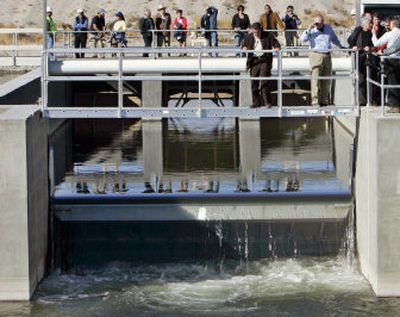
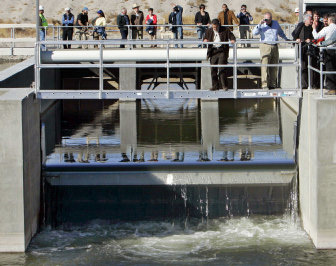
INDEPENDENCE, Calif. – Against a backdrop of lofty snowcapped peaks, about 500 spectators led by Los Angeles Mayor Antonio Villaraigosa gathered at a dam near here Wednesday to watch the Lower Owens River ripple anew with its first flow of High Sierra water in nearly a century.
The largest river habitat restoration effort ever attempted in the West started at 12:15 p.m. when Villaraigosa turned a knob to open a new clamshell-shaped steel gate, redirecting a portion of the waters that have flowed into Los Angeles Aqueduct since 1913.
The event marked a detente in the historic water wars that have boiled in the Owens Valley since the early 1900s, when Los Angeles city agents posed as ranchers and farmers to buy land and water rights in the valley and build an aqueduct to slake the thirst of the growing metropolis. The deception became grist for books and movies – such as “Chinatown” – that portrayed the dark underbelly of Los Angeles’ formative years.
Cheers and applause – along with the grinding gears of the steel gate – welcomed the icy, emerald-green water that roared into the river channel.
Villaraigosa gave a thumbs-up and echoed the words of Los Angeles water czar William Mulholland almost exactly 93 years ago, declaring, “Owens Valley says, ‘Take the water back.’ “
In an interview moments earlier, Villaraigosa said, “This is a new chapter in our relationship with the Owens Valley. We can’t take back what happened here 90 years ago, but we can make it better.”
On Nov. 5, 1913, about 40,000 people assembled at the southern end of the gravity-powered aqueduct and cheered when the first Owens River water splashed into the San Fernando Valley.
Among them was Mulholland, who told the crowd: “There it is! Take it!”
But the engineering marvel that transformed Los Angeles into a metropolis came at a high price for residents of this rugged wide-open territory bisected by U.S. Highway 395. By diverting the water into the aqueduct, there was no more for the 62-mile-long Lower Owens River. It also denied water to the river’s massive catch basin, Owens Lake, which evaporated into salt flats prone to choking dust storms.
The Second Los Angeles Aqueduct opened in 1970. Beginning below the Owens lakebed and ending 200 miles south in the San Fernando Valley, it added 50 percent more capacity to the water system.
The two Los Angeles aqueducts deliver about 430 million gallons a day to the city.
After groundwater pumping by the Los Angeles Department of Water and Power between 1970 and 1990 destroyed animal habitats in the Owens Valley, the department agreed in 1991 to restore the Lower Owens River to compensate for the damage.
In 2001, a lawsuit was brought by the California Department of Fish and Game, the California State Lands Commission, the Sierra Club and the Owens Valley Committee, accusing the DWP of deliberately missing deadlines for implementing the plan.
The DWP had missed at least 13 deadlines by last September, when a state Court of Appeal upheld an Inyo County Superior Court order that would ban the city from using the Second Los Angeles Aqueduct if it continued delaying the river restoration project.
The Lower Owens River Project, which has cost the city $39 million to launch, is not expected to result in a significant loss of water or in a rate increase for users downstream.