
Afghanistan conflict at crossroads
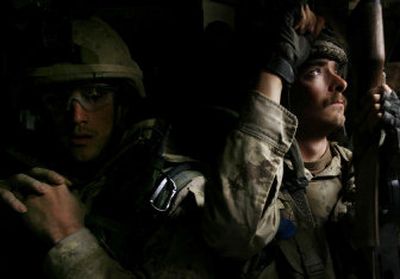
KABUL, Afghanistan – The conflict in Afghanistan has entered a dangerous phase, and the next three to six months could prove crucial in determining whether the United States and NATO can suppress a revitalized enemy – or be dragged into another fight with an Islamic insurgency, according to senior military and security officials and diplomats.
Popular support for the central government is faltering, and Western military allies are deeply divided over how best to combat the insurgency, they say.
On the other side of the fight, the Taliban has regained the strength to dominate large swaths of the country, and government control is tenuous in at least 20 percent of the country.
Militants have built a network of bases in the tribal hinterlands that straddle the frontier with Pakistan. Over the past year, a growing number of mobile encampments on the Afghan side of the border have given the insurgents greater self-sufficiency, military officials say, although they still draw on logistical support and weaponry from the Pakistani side.
“They can come and go pretty much undetected,” said U.S. Army Brig. Gen. Michael T. Harrison Sr., who is overseeing the training of the struggling Afghan national army.
Observers point to an upward trend in violence, including suicide attacks, roadside bombs and border clashes.
“We have a bona fide war going on,” said Harrison.
A widely cited recent report by the Joint Coordination and Monitoring Board, a panel of Afghan and foreign officials, said such attacks had increased fourfold from the previous year, killing at least 3,700 people this year.
Maj. Luke Knittig, a military spokesman in Kabul for NATO’s International Security Assistance Force, said he did not believe the report accurately reflected long-term trends in the fighting.
But a number of outside experts tracking the trajectory of the conflict supported the panel’s assessment of a growing threat. At stake for the United States and its NATO allies is not an outright battlefield defeat by the Taliban and other insurgent groups.
“We should be careful that we don’t overstate this militarily unconventional challenge,” Gen. James L. Jones, NATO’s supreme allied commander, told reporters last week in Riga, Latvia, where NATO leaders were meeting. “We will not be defeated militarily by the Taliban.”
NATO has 32,000 troops in the country, backed by formidable airpower. But the patchwork of militant groups battling the Western allies has its own arsenal of strengths.
Insurgent attacks, whose low-tech tactics echo those used against U.S. forces in Iraq, are often ineffectual. But some hit home. On Wednesday, for example, two American civilian contractors were killed in a suicide bombing in Kandahar – the sixth such attack in 10 days. Nearly 180 NATO and allied troops have been killed in fighting this year in Afghanistan.
The number of casualties has been enough to ignite public debate over the Afghan mission in several NATO countries, including Canada, which has more than 2,000 troops deployed, mostly in the violent south, the traditional seat of Taliban power.
Within Afghanistan, civilians bear the brunt not only of insurgent attacks, but NATO’s offensive against the militants. In October, a NATO airstrike in southern Afghanistan killed more than 30 civilians, most of them thought to be nomadic herders. Civilian deaths account for about one-quarter of the overall fatalities this year and heighten resentment of the occupiers while feeding a gnawing sense of insecurity.
In terms of casualties, the conflict is lopsided. The number of insurgent fatalities over the past year could be as high as 7,000, according to some independent estimates. But the Taliban draw on an inexhaustible supply of potential foot-soldiers.
“Recruitment is not a problem for them – not a problem at all,” said Ayesha Siddiqa, an independent security analyst in Pakistan.
The allies are well aware that simply killing large numbers of insurgents will not constitute a victory. Western officials say they need to prevent the militants from seizing and holding more territory, establish reasonably secure conditions in the capital and the hinterlands, choke off infiltration across the porous Pakistani border and mend fences with restive tribal leaders. All those tasks are proving difficult.
The insurgents include remnants of the Taliban, the austere Islamist movement that ruled Afghanistan for five years and sheltered Osama bin Laden’s al-Qaida. The volatile brew includes competing warlords, part-time fighters, recruits from the ranks of the poor and unemployed, and disaffected youth, often graduates of Taliban-inspired “madrasas,” or religious seminaries.
Viktor Korgun, an analyst with the Russian Academy of Sciences who has had long experience in Afghan affairs, describes the insurgents as “a fresh new generation … copying the skills and ways of the armed resistance groups in Iraq.”
The Taliban hold sway in much of the border Zabul province, several Afghan and Western officials say, and in other provinces, including Kandahar and Helmand, the insurgents operate freely outside major cities and towns.
A number of interlocking factors have contributed to the insurgent comeback:
•The U.S.-backed government of President Hamid Karzai has been slow in asserting itself throughout the country.
•Afghanistan’s drug trade has also revived at an explosive rate. Opium cultivation rose this year by nearly 60 percent, according to the U.N. drug agency and the World Bank, and officials say drug money has become a driving force behind the insurgency.
•The lack of security has severely stunted development projects, which in turn has fostered widespread disillusionment. Particularly in poor rural areas, many Afghans feel their daily lot has improved little since Taliban times and blame the same Americans they once hailed as liberators.
“People previously were repelled by the fanaticism of the Taliban, but anger at Americans is growing,” said Talat Masood, a retired Pakistani general who is now an independent analyst. “And, ultimately, they would prefer that their lives be secure. It’s a survival instinct.”