
Lessons on living
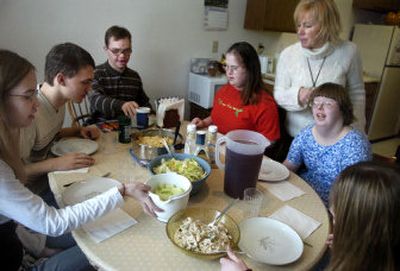

When Andrew Jaeger looks into the future, he sees himself with a good job, making good money helping elderly people. He’ll be driving a car and living in his own apartment.
“I’m learning how to make it on my own in the real world. I’m learning how to take care of myself without parents being there,” said Jaeger, 18, who is disabled.
Jaeger credits his positive outlook to the East Valley School District’s Success Toward Adult Responsibility program.
The district developed the program this year to give developmentally disabled students the skills needed to transition from being high school students to responsible young adults.
School districts are required by law to provide services to special education students until they’re 21.
“The (STAR) program really did just evolve as we tried to find better ways of working with our 18- to 21-year-old students. It wasn’t appropriate for them to be on campus so we looked into some other options,” said Jacqueline Johnson, special education services coordinator at East Valley.
East Valley leased a two-bedroom apartment in the district that serves as the “classroom” for the STAR program. It has been decorated and furnished with donations from district staff and parents.
The district transports the eight students in the program to and from the apartment Monday through Thursday and every other Friday. They arrive at 7:15 a.m. and leave at 2 p.m.
“Instruction begins the minute they get there. They have to learn to fix breakfast, and they are responsible for fixing lunches if they work,” said Leah Lucero, special education instructor for the program.
Currently six of the students are working in unpaid positions where they learn employment and communication skills. The students create a portfolio that includes their résumé and evaluations from employers.
Jaeger has learned how to take a city bus from the apartment in Spokane Valley to Spokane Community College and then transfer to the Hillyard Center on North Market where he takes classes through the People Accessing Careers and Education program offered through Community Colleges of Spokane.
“Through PACE Services I’m learning how to get a job and have a great attitude, how to make a good first impression with the boss, how to write a good résumé and cover letter,” said Jaeger.
Most of the students have their food worker cards, and in January they will take a first-aid class. “We’re always looking for ways to increase their employment opportunities,” said Lucero.
The focus in this classroom is on functional academics, but Lucero, with paraeducators Brenda Brown and Glenna Olsen, also teach the students everything they need to know about taking care of a home.
Students learn to cook, clean, shop for groceries, wash dishes, vacuum, fold clothes, take out the trash and take care of house plants, said Lucero.
Parents are a big part of the planning process. At the beginning of the school year, families, students and the staff create a transition plan for each student based on his or her interests, skills, employment focus and limitations.
Rondy Alexander is proud of her daughter, Sara’s, progress. The 20-year-old was born with Down syndrome.
“I’ve been an advocate for this since we came into high school. This program is a really great learning experience,” said Alexander.
Sara is now doing the dishes, vacuuming and making her own lunch at home. She’s learning about personal safety and social skills.
“Sometimes we joke, ‘Who told my daughter she could be independent?’ It’s an important program for our kids,” said Alexander.
Lucero said that the Individualized Education Program team picks students. “It’s not a good fit for all students,” said Lucero. “If the student can go on to a job or community college without support they wouldn’t be a candidate for this program. We offer extra support for finding a job, learning a job or just giving the student extra time to develop more skills.”
About half of the students in the program will eventually be able to live independently, said Lucero. The others will learn to be as independent and productive as possible.
“I love this program. It’s a big, new experience for me. It helps me be more independent,” said Jaeger. “My parents are very surprised and very happy. They’re proud of me.”