
Giving guidance for the next step

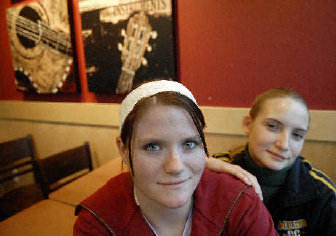
Leaving high school and discovering what to do with your life is hard enough without having a disability that interferes with your social skills.
Fortunately for Veronica VanAuch, she has a friend to help her along the way.
“I hope Lindsay will help me figure out what I want to do,” said VanAuch, 18, a Mead High School senior.
Lindsay Davis, a 21-year-old Whitworth College student, doesn’t have a lot of time on her hands, but she has enough to share with a younger woman who needs a little guidance.
“I just pry her open and see what she’s all about,” Davis said of her protégé.
The two were brought together by Project MOVE, a mentoring program for Spokane County individuals ages 16 to 21 who have learning or cognitive disabilities.
VanAuch is a typical high school senior in all ways but one. Asperger’s syndrome impairs her social interaction and nonverbal communication, particularly among peers. For her, relating to teenagers is even more difficult than it is for most people.
A story about VanAuch and how running cross country at Mead helped her personal development appeared in The Spokesman-Review’s sports section in October.
VanAuch is one of 16 students Project MOVE has paired with mentors from the community, according to Kerry Whitsitt, community outreach specialist. She said the program, which is funded through a research grant from the U.S. Department of Education’s Rehabilitation Services Administration, is the only one of its kind in the country.
It is a collaborative effort of four primary partners: the Washington Initiative for Supported Employment, the University of Washington Center for Disability Policy, Big Brothers Big Sisters of the Inland Northwest and Community-Minded Enterprises.
Often, the support systems in place for students with disabilities disappear after graduation. The nonprofit Project MOVE was designed to help young people advance to post-secondary education or employment.
Nationally, only one out of four people with disabilities is employed and only 27 percent go to college, according to statistics provided by Project MOVE. In 2005, there were 65,436 people with disabilities living in Spokane County, or about 16.5 percent of the population.
Project MOVE, which has been in existence for little more then a year, has a waiting list of young people seeking mentors, according to match coordinator Cathy Sacco. Mentors must be at least 18 years old, commit to one year and pass a criminal background check.
“We’ve held off on recruiting youths to see if we could catch up with mentors,” Sacco said.
VanAuch and Davis were matched after interviews with Project MOVE coordinators and an introductory meeting with each other. They have met about four times this month, mostly over coffee after school.
They talk about common interests such as sports – Davis is getting her degree in athletic training. And they talk about goals – VanAuch would like to go to college, but she wants to find a job first.
The teen fears her Asperger’s will be an impediment to finding work, so Davis is telling her what to expect, for example, at a job interview.
“I help guide her, but I let her do it on her own,” Davis said.
Davis, of Lake Forest, Calif., said she gets college credit for volunteering, but she doesn’t need it.
“I just did it more for the experience,” she said.