
Google e-library draws opposition
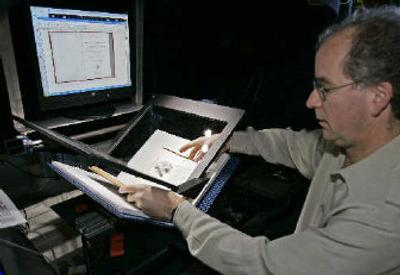
SAN FRANCISCO – Already facing a legal challenge for alleged copyright infringement, Google Inc.’s crusade to build a digital library has triggered a philosophical debate with an alternative project promising better online access to the world’s books, art and historical documents.
The latest tensions revolve around Google’s insistence on chaining the digital content to its Internet-leading search engine and the nine major libraries that have aligned themselves with the Mountain View-based company.
A splinter group called the Open Content Alliance favors a less restrictive approach to prevent mankind’s accumulated knowledge from being controlled by a commercial entity, even if it’s a company like Google that has embraced “Don’t Be Evil” as its creed.
“You are talking about the fruits of our civilization and culture. You want to keep it open and certainly don’t want any company to enclose it,” said Doron Weber, program director of public understanding of science and technology for the Alfred P. Sloan Foundation.
The New York-based foundation recently announced a $1 million grant to the Internet Archive, a leader in the Open Content Alliance, to help pay for digital copies of collections owned by the Boston Public Library, the Getty Research Institute and the Metropolitan Museum of Art.
The works to be scanned include the personal library of John Adams, the nation’s second president, and thousands of images from the Metropolitan Museum.
The Sloan grant also will be used to scan a collection of anti-slavery material provided by the John Hopkins University Libraries and documents about the Gold Rush from a library at the University of California at Berkeley.
The deal represents a coup for Internet Archive founder Brewster Kahle, a strident critic of the controls that Google has imposed on its book-scanning initiative.
“They don’t want the books to appear in anyone else’s search engine but their own, which is a little peculiar for a company that says its mission is to make information universally accessible,” Kahle said.
Google’s restrictions on its digital book copies stem in part from the company’s decision to scan copyrighted material without explicit permission. Google wants to ensure only small excerpts from the copyrighted material appear online – snippets that the company believes fall under “fair use” protections of U.S. law.
A group of authors and publishers nevertheless have sued Google for copyright infringement in a year-old case that is slowly wending its way through federal court.
In contrast, the Open Content Alliance won’t scan copyrighted content unless it receives the permission of the copyright owner. Most of the roughly 100,000 books that the alliance has scanned so far are works whose copyrights have expired.
Google hasn’t said how many digital copies it has made since announcing its ambitious project two years ago. The company will only acknowledge that it is scanning more than 3,000 books per day – a rate that translates into more than 1 million annually. Google also is footing a bill expected to exceed $100 million to make the digital copies – a commitment that appeals to many libraries.
The non-copyrighted material in Google’s search engine can be downloaded and printed out – a feature that the company believes mirrors the goals of the Open Content Alliance.
Although the Open Content Alliance depends on the Internet Archive to host its digital copies, other search engines are being encouraged to index the material too.
Both Yahoo Inc. and Microsoft Corp., which run the two largest search engines behind Google, belong to the alliance. The group has more than 60 members, consisting mostly of libraries and universities.