
Mental health care stabilizing
For years, Spokane County had been bedeviled by a simple but persistent problem: It sent too many psychiatric patients to the state hospital in Medical Lake.
The bill to taxpayers sometimes topped $200,000 a month, as state officials penalized the county for failing to treat the psychiatric patients in less restrictive environs like supported living centers.
But last month, the bills stopped.
“We are managing what had been an unmanageable system,” said Christine Barada, the county’s director of community services, which include public mental-health care.
One year after voters approved a sales-tax increase to plug holes in the mental health system, a slew of new programs has begun to emerge in the county. The three-year tax has generated $4 million since its inception last spring and is expected to generate $6 million next year.
By providing intensive treatment to those with the most severe mental illnesses and by increasing housing, the programs are designed to keep the mentally ill off the streets and out of psychiatric hospitals and jail.
At first glance, they appear to be working.
Since Nov. 14, the county has not been fined once by the state’s Mental Health Division. In the two months prior, the state fined the county more than $500,000 because so many of its residents had to be hospitalized.
“The taxpayers gave us a vote of trust to really do this and to do this right,” said County Commissioner Mark Richard, a strong proponent of the tax initiative. “We’re not out of the woods yet, but I’m exceedingly happy about getting (the fines) under control.”
The revamped programs try to treat people before their illness becomes so acute that they require hospitalization. The programs include:
“A crisis diversion team that provides assistance in finding shelter, food and medications to people with severe mental illness.
“A network of temporary housing – ranging from less than 24 hours to several days – that functions as an alternative to psychiatric hospitalization. Another program provides services to patients in nursing facilities with mental health issues.
“An expanded mental health court to help low-risk offenders access treatment and prevent repeat offenses.
“We didn’t set out to design a single program; we tried to design an integrative service delivery system,” said David Panken, executive director of Spokane Mental Health, the largest contractor in the county system. “These programs are synergistic.”
One year ago, a bleak outlook
In the past year, the county’s public mental health system suffered a series of financial and professional problems.
Mental health providers were forced to slash programs and staff in 2005 after the county uncovered a $7.5 million shortfall.
In the midst of the budget woes, the county closed a $5.5 million crisis center. Though early data indicated it diverted patients from hospitalization, the building had to close because design flaws placed costly restrictions on its use.
The county also flunked a massive statewide review in January, though officials quickly recovered to pass a second review just months later.
The one bright spot was a mental health sales tax initiative passed by voters in November – to the surprise of many county leaders.
Barada, a former county official hired to oversee the public mental health system in September 2005, immediately mended frayed relationships with the county’s contractors and providers.
“We may not all always agree, but we can talk it out,” said Susan Hammond, director of psychiatric services at Sacred Heart Medical Center.
Barada worked closely with Spokane Mental Health, the county’s largest provider of mental health services, which had a frosty relationship with previous community services director Kasey Kramer.
By May, the county had severed its relationship with a California-based managed care firm and switched to Behavioral Health Options, saving more than $200,000 in six months.
Meanwhile, Spokane Mental Health, which laid off one-fifth of its work force in 2005, secured an additional $1.35 million in funding and hired back some of its former staff. The provider’s staffing remains below 2005 levels, however.
Adding to its influence, SMH staff worked hand in hand with county officials and other contractors to lead a redesign of the system.
Others did not fare as well.
Lutheran Community Services Northwest, which specializes in treating emotionally disturbed children, laid off 23 staff members after its contract shrank from $2.1 million in 2005 to $1.3 million.
“We all understand if you don’t take care of the children, some of them can become the adults in the system tomorrow,” said Dennis McGaughy, regional vice president at Lutheran. “But they looked at the costs, and I think they felt they had no choice but to make these cuts.”
In an interview last week, Barada said the county would soon make an additional $435,000 available for children’s services.
Sales tax fuels changes
In its redesign, the county bet big on its ability to eliminate the state penalties for sending too many patients to Eastern State Hospital. None of the $4 million generated by the tax was dedicated to paying the fine, and the county’s 2008 fiscal projection assumes no more penalties will be incurred.
Those hospitalizations were not only costly – the county pays $514 per day for each patient above its state allocation – but traumatic for patients.
“The idea is to stabilize people in the community,” said John Tran, associate medical director at Spokane Mental Health. “You can imagine someone with dementia trying to readapt to a new environment.”
The county’s redesign keys on “wraparound” services that help people with severe mental illness live in the community by providing housing support, counseling and outreach teams. Residential centers, such as the Hartson House, provide temporary care for people in crisis.
Another program works with patients in skilled nursing facilities, again attempting to prevent them from requiring psychiatric hospitalization.
“We try to work with that individual wherever they are in the community,” said Jan Dobbs, SMH’s director of crisis response services.
The county has expanded the number of beds available in congregate care facilities, which provide staff to help people with mental illness live outside the hospital. It has also invested in outpatient treatment programs for non-Medicaid patients – those consumers who aren’t enrolled in the federal program for low-income Americans but also do not have private health insurance.
Mental health officials also invested more than $750,000 in a therapeutic court, which is designed to identify treatment options for low-risk offenders. The program focuses on offenders who continually clog county jails with misdemeanor crimes that may, in part, be due to their illnesses, officials said.
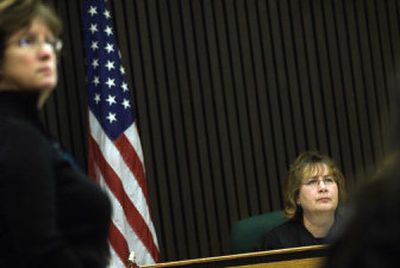
“The hope is to reduce jail costs and provide treatment to people who have committed minor offenses much more quickly,” said Court Commissioner Virginia Rockwood, who presides over the mental health docket. “We hope to get them back in a position to receive their services rather than have a misdemeanor charge that lands them in jail.”