
Buying a fridge for all seasons

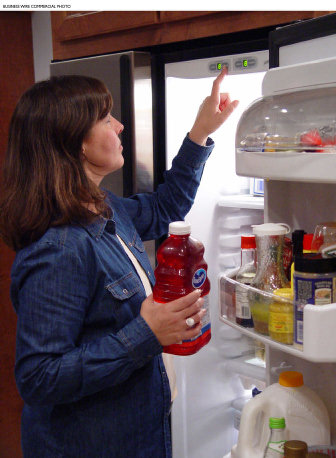
PHILADELPHIA — At this time of year, a refrigerator never seems big enough, no matter how big it actually is. Holiday inadequacies aside, if you’re thinking of buying a new fridge, here are some points to consider (compiled from tips offered by Whirlpool, SubZero and the many other manufacturers at this year’s Kitchen and Bath Industry Show).
Need to know: How much refrigerator will meet your needs. Consider the shapes and sizes of items you typically store, and how your chilling/freezing requirements stack up. Look not just at overall capacity, but also at how various bin and shelf options can help you store food efficiently.
Size matters: A refrigerator should be neither too large nor too small. You want one spacious enough for special occasions, of course, but modest enough that you’re not running an empty, energy-wasting box the rest of the time. Consider how well the capacity of your current refrigerator suits you, then scale up or down accordingly.
The typical refrigerator provides between 18 and 26 cubic feet of storage space. Models with top and bottom freezers typically have a capacity range of 10 to 22 cubic feet. For a family of four, 19 to 22 cubic feet is ideal. A very large side-by-side model could have a capacity as large as 26 cubic feet.
Running cold: Freezer capacity can vary quite substantially from model to model. Think about what you store in there and plan accordingly. Pre-packaged products (the boxes alone often eat up a lot of freezer space)? Bulk items? Bags of ice? Remember, too, that an icemaker will need space of its own.
Buyer beware: Capacity is not the only issue here. Before you shop, be sure to measure carefully the space you have for a new fridge. As houses have gotten bigger, appliances have gotten taller, wider and deeper. Finding what you want in the size you want is sometimes a challenge, especially if you own an older house.
Refrigerators need room to “breathe,” so don’t squeeze one into a tight spot. Make sure doors and drawers can open without obstruction.
Be sure to ask: How energy-efficient is this model? A refrigerator operates nonstop, and in a typical household accounts for 12 percent to 20 percent of total power used in one year.
For this reason, an aging refrigerator is probably costing you money. Many models produced before 1999 don’t even meet current U.S. Department of Energy power-usage guidelines. The latest refrigerators use 30 percent less electricity than models built 10 years ago because of better insulation and more efficient compressors and motors.
Decisions, decisions: Once you calculate what fits your needs and what fits your space, you’ll have to name your preference from side-by-side, top-mount, bottom-mount, or compact/under-counter models.
What will it cost? Residential-model side-by-sides range from $800 to $2,500; top freezers, $500 to $2,000. Bottom freezers run from $800 to $2,100; compacts run from $150 to $400.
Commercial refrigerators are another thing entirely; prices start at $1,000 and can go significantly higher.
Good advice: Refrigerator shelves should be sturdy, flexible, and easy to clean. Glass is generally better. Adjustable shelves are a plus — some models have half-shelves that can be matched up for a wide, flat surface or adjusted separately for odd-height items.
Look, too, for easy-to-reach temperature and humidity controls.