
Learn from animals
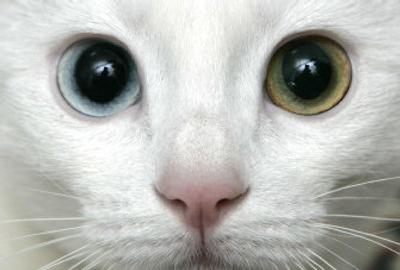
An Egyptian cat guides a third-grade online tour set in ancient times when felines ruled. Young kids can help the cat find a missing pharaoh on an interactive Web site while learning cat facts, Egyptian history and geography.
This cat-related learning tool is among others incorporating a dog, a gerbil and other pets as part of a free online curriculum for grades K-3 developed by the People-Pet Partnership program at Washington State University.
“All the games were designed to make sure they are age appropriate,” says Dr. Francois Martin, head of People-Pet Partnership. “The feline curriculum is for children in third grade, when they can do reading. It’s like a fully scripted movie and kids help solve the mystery of the missing pharaoh.”
Bast, a cat goddess in ancient Egypt, has the lead role.
Another section of People-Pet Partnership’s online curriculum for second-graders involves Jeremy the Gerbil with small-critter facts and games. A kindergarten to first-grade segment has Clover the Clumber Spaniel to teach the importance of choosing the right kind of pet for a family and the differences between pets, farm animals and wildlife.
The People-Pet Partnership, part of the College of Veterinary Medicine at WSU, offers the curriculum at www.vetmed.wsu.edu /depts-pppp/child.asp to promote science, education and the proper treatment of companion animals. The activities are aligned with the National Science Education Standards.
The site includes math, science, English and art games.
“The general goal we have for the kids is we want them to be actively involved in the curriculum,” adds Martin. “The underlying idea is the more you know about animals, the better you will be at providing care for them.”
A fourth-grade online curriculum focusing on dogs and medieval history is the next goal, according to Martin, who has applied for a new grant.
The first K-3 online curriculum debuted about three years ago, sponsored by a grant of just over $75,000 from The Kenneth A. Scott Charitable Trust.
Martin is also Associate Director of the Center for the Study of Animal Well-Being at WSU in addition to heading People-Pet Partnership, a public service program that exists to research and educate the public about the human-animal bond. It teaches children responsible pet ownership, supports Palouse Area Therapeutic Horsemanship and researches the human-animal bond.
Martin and other colleagues wanted an online curriculum to be user-friendly.
“There’s a section for teachers and parents. If (teachers) want to talk about animals, it’s easy to use the information in the classroom.”
A WSU veterinarian and a professor in science education were among those who collaborated with Martin. The basis for the online learning was the curriculum, “Learning and Living Together,” written by PPP founder Dr. Leo Bustad in the mid-1980s.
“When I came here in 1998, we decided to update the curriculum,” recalls Martin. “It gave me the idea to expand on this great material. We wanted to reach more people. The online curriculum is available at no charge, so anyone with access to a computer can go online and enjoy it.
“My hope is that the parents and teachers will be involved, but if kids go online and want to do it themselves they can because there are prompts to help. It’s the starting point. We want the students to look for additional information, such as go to the library and read more, or maybe do more in the classroom such as invite a veterinarian to talk.”
The information for young children also emphasizes the important role animals play in our lives.
“It’s more than just a pet-care curriculum. It’s a humane curriculum. As much as possible for children, we want to provide them with the big picture. If you want a pet, it needs to be the right pet for you and your family.”