
Howard Waterman knew teaching was his calling
Howard Waterman’s lifelong commitment to education began as a junior high school student in Juneau, Alaska, when he appeared in the town’s newspaper as a member of the Future Teachers of America.
“He knew at a very young age that he wanted to be a teacher,” his wife, DeAnn Waterman said. “And he lived it everyday.”
Waterman, a 30-year Central Valley teacher, became a well-known name among science educators in the state. He served in various leadership roles, and was named teacher of the year both for the state and at Central Valley.
In later years through his work at Washington State University, Waterman taught many teachers the craft he became so well-known for.
“He was generous and insightful and had a great sense of humor. I know his students liked him,” said Krysta Waterman-Steggell, one of Waterman’s two daughters. “His presence in a room was overwhelming.”
Waterman died Dec. 14 at the age of 62 after a heart attack.
Waterman and his wife were studying to be teachers at Eastern Washington University when they met in 1962. They married in 1964.
His teaching career began in 1966 at Central Valley High School. He would spend 30 years at the same school, teaching science until his retirement in 1996.
“That’s kind of a rarity in this day and age,” his wife said.
Waterman became very involved with various teaching organizations as a high school teacher, having served as the president of the Washington Science Teacher’s Association and the Central Valley Education Association. He received a graduate degree from the University of Idaho in ecology.
Waterman earned numerous awards from national and state organizations, having appeared in Time magazine after winning a national award for science and math teachers. In 1993 he earned the prestigious Washington State President’s Award for Excellence in Science and Mathematics Teaching, signed by then-Gov. Mike Lowry.
“He would leave for work each day and say, ‘I can’t wait to see what I’m going to do today,’ ” DeAnn Waterman said. “He loved to teach.”
Waterman was an advocate for the inquiry method of teaching, traveling all over the country presenting seminars to educators. The inquiry method of teaching allows students to ask the questions, and find the answers.
“He believed that kids learn a lot better when they figure things out,” his wife said.
Waterman was very passionate about the work done in the classroom, and was very outspoken about the effect that extracurricular activities had on learning.
“He thought things like sports and band took away important time from the classroom,” his daughter said. “He didn’t like sports.”
In the staff room, “he would go and visit the women because they would talk about other things besides sports,” DeAnn Waterman said.
After his retirement from Central Valley, Waterman found ways to keep busy.
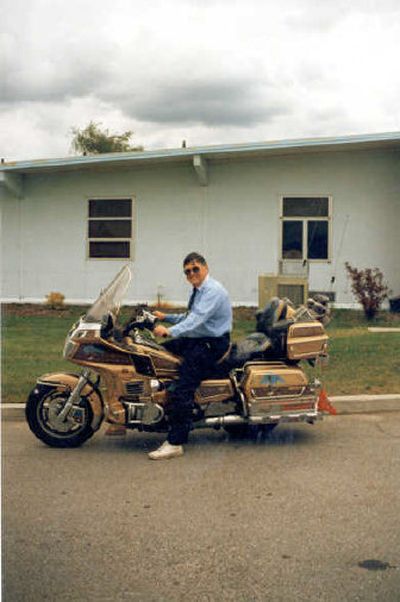
He and his wife traveled all over the country on their Honda Gold Wing motorcycles. They owned six motorcycles at one time.
Waterman survived numerous wrecks during this travels, that left him with a lifetime of “road rash,” but he always got back on the bike.
“It was just another way to experience the outdoors,” his wife said.
Waterman also pushed on in the field of education during his retirement.
A month after leaving Central Valley, he took a job at Washington State University teaching students how to teach.
He helped create a science enrichment program for teachers through WSU Spokane called the K-12 CityLab. The program provided instruction support to science teachers and students through research, based on the inquiry model of teaching.
With his help, the program has been awarded nearly $700,000 in grants since its inception in 1995, said Sylvia Oliver the director of program.
“Howard’s passion was to help teachers learn bow to teach science better. He was a phenomenal teacher at all levels,” Oliver said. “Up until the time Howard passed away I was still learning from him on how to teach. Every time that we got together, every time that he was teaching, I was learning new things.”
At the end of every semester while teaching at WSU, Waterman would take a picture of his students so he could look back and remember their faces.
He also had the students write a letter about what they wanted to accomplish in the next fives years, and asked them to place the letters in a self addressed stamped envelope. In five years, Waterman would mail the letter to the students.
After his death, his family found several letters still waiting to be mailed.
“We’re still going to honor that, we’ll just put something like a sticker indicating that he has passed,” Waterman-Steggell said. “I’ll always remember his mantra for life, to be the best you can be.”