
A wild hair to see turtles
The last time I was this close to a turtle I was 7 years old. Her name was Tami (who knew her gender, but with that tiny head and those delicate flippers, she had to be a girl).
Tami lived on my dresser in a Plexiglas pan complete with a circular stairway that led to a tiny platform. Tami frequently scrambled out of the water, navigated the stairs and lounged under the rigid plastic palm tree.
You probably remember – you might have had a Tami, too.
Tonight I’m once again minding turtles, but under much different conditions. Along with a half dozen volunteers, I’m helping release hundreds of baby sea turtles into the Pacific Ocean on the coast of Mexico.
Right now they are about the same size my Tami was, but eventually they will weigh nearly 100 pounds. All of these turtles happen to be named “Olive” – olive ridley, to be exact.
There’s a bit of moon glow reflecting off the water and the overhead sky is an endless black studded with more stars than midnight in Montana. Nearly 100 baby olive ridley sea turtles are scratching around the plastic washtub in my hands, jockeying for the top layer.
They seem to be getting more agitated as we march down the beach. Can they smell the ocean? Do they know we’re nearing the place they were born?
When we reach the release spot, turtle camp veterinarian Dr. Miguel Angel Floras Peregrina shows us how to gently tip the bins and slide the babies into the froth of incoming waves. Instinctively, the recently hatched turtles scramble toward the ocean as fast as their tiny fins will carry them. We watch helplessly as the shore break whacks their tiny bodies and sends them rolling away from the sea or carries them pell-mell into the depths.
We’ve been admonished not to touch them because our mosquito repellent-covered hands are lethal to their sensitive systems, so we standby helplessly as Mother Nature decides who will sprint and who will struggle toward the safety of the deep. When a wave rushes up and captures dozens of the babies, we actually cheer. It’s a south of the border experience that knocks the salt right off a margarita.
Turtle-loving care
Just two hours north of tourist-saturated Puerto Vallarta is Playa Las Tortugas, an unusual eco-resort and residential community more attuned to nature than hedonism.
PV, as the local expatriates call Puerto Vallarta, is exciting, stimulating, busy and brash. PLT, on the other hand, is a siesta-inducing getaway where the number of guests will rarely exceed 50.
At PLT you wind down in a Mexican-style villa, power snooze in a breeze-kissed hammock, float in the hibiscus-framed pool and walk for miles on a deserted beach with nary a vendor in sight. Nightlife consists of lounging on the veranda counting shooting stars, with or without a margarita.
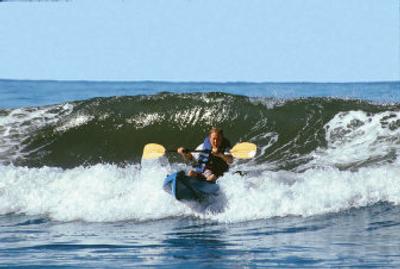
If all this sounds a little too bucolic, there’s always boogie boarding, sea kayaking, horseback riding or canoeing the lush estuary that borders the north edge of the resort.
And then there’s Olive and friends.
From August through October, pregnant sea turtles swim ashore along the coast of Mexico, returning to the spot where they were born to lay their eggs. After lumbering ashore and digging a 2-foot-deep hole, the female sea turtles deposit an average of 105 eggs that are roughly the size of ping-pong balls. It’s slow going and can take nearly an hour.
This is the one of the most vulnerable times for the soft-shelled eggs. Marauding dogs, raccoons, crabs and birds often attack the nests as the female lays her eggs, and she is powerless to stop them from gutting the nest.
Humans are formidable enemies as well. Mexican folklore has elevated the raw eggs to Viagra status and poachers can earn a pretty peso selling them at local taverns. A single egg can net as much as $10 U.S. – no small sum in this undeveloped area with few jobs and fewer prospects.
Once the egg-laying is complete, the mother turtle quickly brushes sand on the nest and compacts it with her fins. Then she plods back to sea. The eggs may be hidden in their sandy incubation chamber, but they are still in great peril until the waves wash away the mother’s telltale tracks.
In roughly 55 days, the 2-inch-long babies hatch, make their way to the surface and attempt to escape predators as they scuttle into the sea. If they’ve made the mistake of emerging during daylight, they also risk a life-threatening sunburn. Without a conservation program, only about 1 percent would survive.
The PLT club
The Costa Tortuga (Turtle Coast), an 11-mile stretch of beach in the state of Nayarit between Boca Chila and Platanitos, is one of the few protected locations worldwide where olive ridley, hawksbill and leatherback sea turtles return to lay their eggs. Coastal development has squeezed out much of the original nesting grounds; consequently, all three species are listed as endangered and face a very high risk of extinction.
Playa Las Tortugas is a commercial real estate development with overnight lodging that could have gone the way of most Mexican coastal resorts and become a stretch of gorgeous beach flanked by high-rise hotels, effectively eliminating the sea turtle nesting grounds and contributing to the demise of some of nature’s most comically endearing creatures.
Instead it has become an example of what can be accomplished when the government, environmentalists and private developers look beyond the quick fix and the quick buck that plague developing areas around the world.
In 1996, American Robert Hancock bought 43 acres of beach and coconut plantation and began working with the Mexican government and local residents to create an ecologically minded development that would preserve the turtle habitat and the neighboring estuary.
The Mexican government prohibits building within 65 feet of the high-tide mark, and Hancock persuaded the government to impose an additional 65-foot setback along the 11-mile beach. Villas are spread out on the property to maintain open corridors that will allow animals to travel easily from the estuary to beach, and bright outdoor lighting is prohibited.
Hancock donated property for the turtle camp and helped establish a nonprofit turtle conservation center (other financial supporters are the Mexican government and the music group Mana). PLT also contributes to an educational fund for local high schoolers.
The result is more community than resort. Ten villas dot wide swaths of grassy lawn landscaped with clusters of tropical trees and flowers. The two- to four-bedroom villas are completely furnished with fully equipped kitchens and airy rooftop terraces. Visitors can rent by the night or, once-seduced, can talk to Hancock about building their own coastal home.
Visitors and residents at Playa Las Tortugas can become as involved in the turtle preservation efforts as they wish. Floras Peregrina and his small staff always need help patrolling, collecting or returning the hatchlings to the ocean.
You might ride the camp’s ATV in search of nesting females, gently gather the eggs and place them in polystyrene coolers, then record the date and time of collection. Or if you’re on site during hatching (September through November), you can count newborns and help deliver the babies to the sea.
Your efforts will contribute to the survival rate of olive ridley sea turtles, which has risen from about 1 percent to 8 percent under the PLT turtle camp programs.
Of every feather
If sea turtles are the siren call of PLT and isolation is the cloak that warps it all in serenity, the mangrove-rimmed estuary that borders the development is its lesser-known lure.
We volunteers have loaded cameras and water bottles in our backpacks, donned our oldest sandals or sneakers and lathered up with sunscreen and bug repellent. We meet Armando Santiago Navarrete at the edge of the mangrove swamp to get his take on what we’re about to experience.
“Some people think we should be another PV, but it is impossible,” Santiago Navarrete says with no hint of regret. “We don’t have an international airport or tennis or golf or discos. What we have is the turtles on the beach.
“In the estuary, we have bird-watching. We could even put a nudist camp nearby because there’s one beach that nobody goes to.”
Santiago Navarrete tells us that hundreds of bird species visit or live in the estuary, ranging from tiny hummingbirds to regal herons. Whales frequent the mouth of the estuary during mating season for what he calls their “love play.” He tells us to keep an eye out for crocodiles lazing in the mangrove swamps, but not to worry, they don’t eat humans.
He has such a big grin on his face that it’s impossible to tell if he’s telling the truth or teasing the touristas. I learn later that Santiago Navarrete may exaggerate, but he never lies about “his” estuary.
We wade into the ankle-deep black mud and pick a boat. The motley assortment of kayaks and canoes is further testament to the total lack of pretense at PLT.
Soon we have paddled from the stillness of the launch site to the mangrove-rimmed waterway leading toward the mountains. Immediately we spot snowy egrets, white ibis and roseate spoonbills in trees, skirting the water, soaring overhead.
Santiago Navarrete tags them with their English and Latin names, his wonderfully accented Spanish taking the edge right off the harsh nomenclature.
He rattles off bird habitat and population density like an expert. Surely he has formally studied birds?
“Oh, no,” he replies with that enigmatic smile. “A long time ago I was just a fisherman, but I had a boat, and when an expert birder asked me if I knew birds, I said I knew everything.
“We went bird-watching. I said the first bird was a white bird, the next was a blue one, then a yellow one. I ran out of colors and started to mix them.”
By the time Santiago Navarrete and the birders got back to the dock, they presented him with “A Field Guide to the Birds of Mexico.” He has had his nose in it ever since.
On our last night, the volunteers have gathered on one of the villa’s terraces and nearly everyone is stretched out on a chaise lounge. We’re fixated on the inky sky watching for shooting stars.
We can hear the waves a few hundred yards away and we know somewhere on the beach, a mother sea turtle is probably lumbering ashore, depositing eggs that Floras Peregrina’s staff will collect. Or they will complete the circle and take a new batch of hatchlings to the water’s edge.
A shooting star streaks across the sky. Direct, unstoppable, determined. Just like Olive and friends.