
Cinematic memory
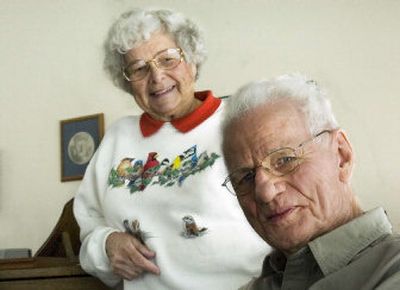

Tears flowed in the darkness of the theater as images of their old life flashed upon the screen.
Dr. Ev Fuller couldn’t help but cry as he and his wife, Liz, watched “End of the Spear,” the recently released film about missionaries in the jungles of Ecuador.
The Spokane surgeon was flooded with memories – of the hot tropical air that engulfed the remote village of Shell Mera, their home for more than a dozen years; of the indigenous tribes they served through their medical ministry; of good friends, especially those killed by the spears of the Waodani Indians.
The movie tells the real-life story of Christian missionaries who move to the foothills of Ecuador’s eastern Andean mountains to preach the Gospel to the area’s isolated tribes. In 1956, five of the missionaries were slain. Instead of fleeing, their widows, children and others remained to work with the people who killed their loved ones.
The Fullers, who lived in Ecuador during the 1950s and ‘60s, were among those missionaries who dedicated their lives to helping the tribes.
Dr. Ev Fuller was the first doctor to work at Shell Mera, a rural town in the rainforest, accessible only by a dirt road often blocked by mudslides. He and Liz, a nurse, helped build and establish the first hospital in the area.
“Christianity gives you courage in life,” said the 88-year-old Ev Fuller, explaining his family’s decision to leave everything they knew for the challenges of life in the jungle. “We were willing to go wherever God wanted to send us.”
Although the Fullers’ story isn’t told in “The End of the Spear,” the couple was very close to Nate Saint, one of the slain missionaries and a central character in the film. It was Saint who convinced them to move from the capital, Quito, to build the hospital in Shell Mera. In turn, Ev Fuller delivered two of Saint’s sons, including Steve Saint, who later forged a friendship with the people who slaughtered his dad.
“Nate Saint was a dreamer and a visionary,” recalled Ev Fuller. “He was my best friend.”
Since the movie came out earlier this year, the Fullers have been sharing their photographs and giving presentations of their experience in Ecuador to fellow residents at the Waterford, a retirement community on the South Hill.
The years they spend in South America transformed them and shaped the lives of their seven children, said Liz Fuller, 85.
The couple never expected they would spend so much time serving the poor overseas. Ev Fuller actually planned on becoming a pediatrician and living comfortably in Schenectady, N.Y. “But God had other plans,” he said.
In 1947, while attending the first convention of the Christian Medical Association, the Fullers met a Presbyterian minister who told them about medical missions around the world. His stories inspired them to change the course of their life.
Three years later, the couple and their four children – ages 7, 5, 3 and 3 months – boarded a freighter from New York Harbor. After two weeks of travel, they landed on the coast of Ecuador.
Sponsored by a number of Christian organizations, including HCJB World Radio, Wycliffe Bible Translators, Mission Aviation Fellowship and First Presbyterian Church in Schenectady, the family spent three years in Quito, where they met Nate Saint for the first time in 1950. Saint, who first came to Ecuador in 1948, told them about the dire need for medical care in the remote eastern jungle and shared his vision of starting a hospital for the tribes.
Even after the death of Nate Saint, the Fullers continued their efforts to build a medical center. In 1958, the 14-bed Epp Memorial Hospital opened its doors to patients.
The Fullers had three more children during their years in Shell Mera. After they moved back to the United States in 1966, the couple returned to Ecuador every summer to work at the hospital. They also helped raise funds to expand the medical ministry in Ecuador. Thanks to a $1 million grant from the Swedish International Development Agency, the town built a bigger, more modern facility now known as Hospital Vozandes-Shell.
The Fullers – who moved to Spokane in 1990 to be close to their five sons – eventually got involved in other medical mission work in Africa and the Middle East. But their hearts have never left Ecuador, they said.
Their experience there taught them so much about themselves and the world around them, said Liz Fuller. It strengthened their faith in God and in each other.
“It gave me a deeper love for serving the Lord,” she said.