
Looking back to move forward

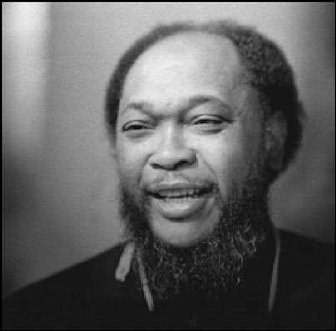
In the Rev. Moses Berry’s backyard in Missouri lies a cemetery for slaves, Native Americans and paupers. It’s the house he was born and raised in, the house his father and grandfather were born and raised in.
“Nothing like living in the place your ancestors lived to give you an idea of your own mortality,” said Berry, a priest in the Orthodox Church of America and a descendant of African American slaves.
Berry Cemetery is now a nationally recognized historical site. Nearby is the Ozarks Afro-American Heritage Museum in Ash Grove, Mo., where Berry is the curator. The collection includes the slave chains and neck irons that once lined the shelves of the house his great-grandfather built in 1875, where Berry lives now.
Berry will share some of that history with Spokane during talks that begin Thursday. The talks will involve African American slave spirituality and will include a display of slavery artifacts. He’ll bring photographs, neck and ankle irons, a slave tag and two quilts from the Underground Railroad.
Quilts were encrypted with messages to guide runaway slaves along the network leading from the American South to Canada. A quilt hanging on the front porch or over a banister was an indicator of a safe house, where the fugitives could stop and rest.
One of the display’s quilts, a double wedding ring style, is unfinished. Berry’s great-grandmother started the quilt before the emancipation in 1863, but she didn’t want to finish in freedom what she began in captivity, Berry said.
“We have some deep reconciliation to make,” he said. His visit to Spokane is part of that reconciliation.
“To see what was used to control slaves, the experience might become more real,” said Nancy Nelson Fletcher, director of the African American Education program at Eastern Washington University.
Americans must become dispassionate about the past, even about symbols of torture such as neck irons, to move forward, Berry said. Slavery is just one part of American history, but it’s a heritage Americans share.
He said that if it weren’t for “fair-minded white people in this country,” such as those who sheltered fugitives along the Underground Railroad, there would still be slavery today.
“Everything done for the good of this country has been a joint effort,” he said.