
Tips for driving in deer-populated areas
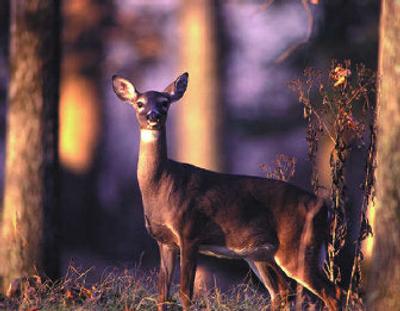
Perhaps you’ve heard the expression, “Like a deer in headlights.” It is used to describe a person who has stopped suddenly or stares into space when caught off guard. The phrase is funny when used in context. To people, however, when a real deer is caught in headlights, it can be scary for you as a driver and deadly for the deer.
The Insurance Institute for Highway Safety recently released a report stating that in crashes with animals, deer were involved in three out of four cases. These accidents occurred most frequently in rural areas, on roads with 55 mph or higher speed limits, and in darkness or at dusk or dawn.
•An estimated 1.5 million deer-vehicle crashes occur each year in the United States, resulting in at least $1.1 billion in vehicle damage. Though deer are most dangerous in the fall mating season, they remain active year-round, making it crucial to be on the lookout for them regardless of the time of year.
•During the day and in warmer weather (when they have lighter-colored coats), it is easier to see deer near the road. But at night or during cold weather months (when their coats often turn darker and grey), it’s very difficult to spot deer. That’s why you should obey the speed limit and be extra cautious around dusk and dawn when deer are most active.
•If you see a deer on the side of the road, slow down, and anticipate the animal darting out.
Deer seldom travel alone. Therefore, there could be several hiding in the woods. Females may also be traveling with their young who are very skittish. Try honking your horn with one long blast to frighten the deer away. Swerving or flashing your lights can harm both you and the deer. You could lose control of your vehicle and hit a tree or another car.
Consequently, during the commotion, the deer may get confused as to which way to run. If you are driving through an area protected by a fence, maintain your guard. Fences are proven to reduce collisions, but deer do often know how to “beat the system” by learning where fences begin and end or simply by jumping over them if the fences aren’t tall enough.
•If you hit a deer, do not touch it. The animal can hurt you or itself if it attempts to move. Get your car off the road if you can and call the police or your local Department of Environmental Protection.
•When you get home, report the accident to your insurance agent. Most animal collisions are covered under the comprehensive portion of your auto insurance.