
Bomb at market kills 62, injures 114
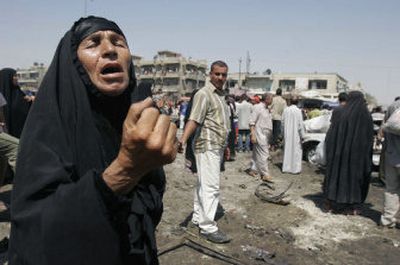
BAGHDAD, Iraq – A suicide car bombing at a crowded open-air market killed 62 people and wounded 114 others Saturday in the deadliest single attack since the Iraqi government was formed six weeks ago. Other violence brought the day’s death toll to more than 100 people.
The market in the poor Shiite neighborhood of Sadr City was teeming with life when the bomber struck, with fruit sellers loudly haggling as shoppers wandered past carts weighed down by vegetables and watermelons.
“Then the huge explosion came,” said Raheem Shawaili, a 47-year-old shopkeeper, recounting how everything around him changed in an instant. First, there were “gray plumes of smoke,” he said. “Then, the smoke became dark.”
The blast blew out windows, ripped doors from their hinges and set ablaze rows of cars. Afterward, small carts used by children to carry goods for shoppers lay wrecked in the dusty street among other debris: metal, human flesh and shattered vegetables.
The attack came as Prime Minister Nouri al-Maliki embarked on a tour of the region, visiting Saudi Arabia and other Persian Gulf states to garner support for a recent reconciliation initiative intended to bridge the gap between Shiites and Sunnis.
Under the plan, amnesty will be offered to some insurgents, although it is still unclear exactly how it will be implemented. Americans have criticized the plan for being too broad, while Sunni Arabs have faulted it for being too narrow.
The high death toll Saturday could further impede al-Maliki’s reconciliation plan.
In Sadr City, the local Shiite political office affiliated with the firebrand cleric Muqtada al-Sadr criticized al-Maliki for going ahead with the trip, while aggravated residents criticized the government and American troops for failing to prevent the attack.
“With whom (does) Maliki want us to make reconciliation?” resident Mansoor Munim, 26, said. “With those who are killing us daily?”
Sectarian violence has inexorably escalated, sending this country skittering to the edge of civil war. On one side, bombs wielded by the Sunni Arab-led insurgency have cut a bloody swath through the Shiite majority, killing soldiers and police officers, women and children. On the other, Sunni leaders allege that police officers and special commandos, most of them Shiites, operate death squads that target Sunnis in a campaign of sectarian cleansing.
On Saturday, Sunni legislator Tayseer Mashhadani and her four bodyguards were kidnapped on the road from Baqubah to Baghdad. According to her political group, 30 armed men manning a checkpoint stopped her convoy, disarmed and abducted everyone except one guard who managed to escape.
The U.S. Embassy in Baghdad condemned the kidnapping as “repugnant.”