
American Legion rolls growing

Jennifer Burkhart joined the American Legion more than a decade ago, but she’s still considered young for the organization. At 41, she works as the adjutant for Post Falls American Legion Post 143, doing administrative work for the commander several hours a week.
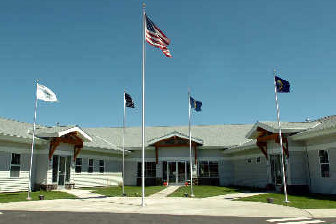
Burkhart and hundreds of her peers will be on hand at the Idaho American Legion state convention Friday through Sunday at the eight-month-old Post Falls Legion hall on Poleline Avenue.
She and other younger members of the group are keeping the organization vibrant as older veterans pass on. World War II vets – most are now in their 80s and 90s – are dying at a rate of roughly 1,000 a day.
For a while, said Post 143 Commander John Dunlap, the Post Falls chapter – the largest in Idaho with 577 members – was losing four or five World War II veterans every week.
Veterans service organizations had been losing membership several years ago, but the trend is reversing as more younger soldiers are joining the American Legion and Veterans of Foreign Wars, said Wade Habshey, American Legion deputy director of public relations.
“It’s an exciting time for us,” Habshey said. “We’ve had a number of opportunities to connect with younger veterans, to offer them a chance to serve other veterans. The young guys and gals have great new ideas.”
Legion membership is experiencing rapid growth nationally, Habshey said. So far this year, more than 195,000 veterans have joined the organization – up from 116,000 in all of 2005, he said. Legion officials say the boost in membership is a result of a highly successful direct mail campaign and local efforts to support families who have soldiers in the Iraq War.
Dunlap, sitting at a table in the Post 143 building Tuesday, also said helping local soldiers’ families has helped recruitment levels. Several of the soldiers of the 116th Engineer Battalion’s Company C, stationed in Post Falls, have joined the group, he said. The post provided food for the soldiers’ families while they were away and still have monthly birthday parties for children of veterans.
Dan Ryan with the 116th joined Post 143 after returning from Iraq in November. A 42-year-old Kootenai County Fire and Rescue deputy chief, Ryan said he joined for the same reasons many of today’s soldiers do.
“It’s a good organization that does a lot of good things, not just for vets but the community,” he said.
Dunlap also had a hand in his recruitment, Ryan said.
“I’ve known John forever, and he kind of twisted my arm and said, ‘Fill this out, you’re a member,’ ” he said.
It was the same way for 1st Sgt. Mike Kish, the commander of Company C.
“When I first got back (Dunlap) hounded me and said, ‘Hey, what’s your holdup?’ “
Kish, 35, said with his active schedule he’s had a hard time getting the application mailed out for the legion. But it’s on the corner of a counter at home, and he intends to mail it out soon.
“Now I’m like, gosh, it’s going in the mail today,” he said, laughing. “Or maybe I’ll just drive it down and drop it off at the post office myself.”
Dunlap’s father and grandfather are American Legion members. He said that played a role in his decision to become a part of the organization.
“There’s a lineage there, but it’s more than that,” he said. “The reason I joined is organizations like the American Legion have been supporting soldiers for years. And they support the local community immensely.”
Dunlap said the American Legion’s support function is important because when he served in the military, it was not happening. A veteran of the Korean and Vietnam wars, Dunlap said he came home only to be labeled a killer and ostracized.
“That’s something you have to live with. Why should this generation go through the same bitterness?” he said.
Kish said it is quite seldom that a person would use the term “baby killer” today as they did during Vietnam, but it does happen.
He said he believes that soldiers who served in Vietnam may now also be joining the American Legion because they no longer want to distance themselves from their military careers.
“Some (veterans) don’t want to dwell on it,” he said. “It takes a little time to wind down.”
Dunlap said many younger soldiers will probably join after they have settled down with families and have time for the activities of the organization. He’s not too worried about dwindling numbers, and he’ll keep serving the ones that ask for it.
“Vets helping vets,” he said. “That’s the name of the game.”