
It’s music to ears of advertisers
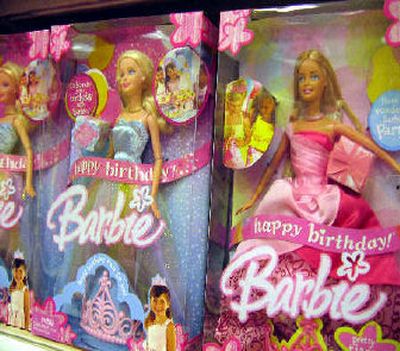
LOS ANGELES — If Barbie were a song, what would she sound like?
The question sat in Tena Clark’s mind as she drove through downtown Los Angeles last fall.
The answer was no small matter. With Barbie’s sales sagging, toy maker Mattel Inc. had turned to Clark, a pioneer in the emerging field of “sonic branding,” to give the icon of American beauty a marketing face-lift.
Recent scientific research had suggested that distinct combinations of a few musical notes — known in the advertising world as a “sonic brand” — could have more influence on consumers than the longer, frequently changing jingles Mattel had used for years.
Clark’s mission was to develop a sonic brand that would define Barbie and become as recognizable as McDonald’s golden arches, the four tones that conclude Intel’s television ads or NBC’s three-bell chime.
“There’s nothing more powerful than music,” said Clark, 52, the founder of Pasadena-based DMI Music & Media Solutions. “Music is processed immediately in the brain’s emotional core. If we can harness that, advertising will impact people in ways they’ve never imagined.”
Corporate America is beginning to agree. Dozens of the world’s largest companies are developing sonic advertising campaigns to compete with those that have emerged in the last few years, such as Yahoo’s yodel and McDonald’s “I’m Lovin’ It.” A Motorola musical burst — “Hello, Moto” — has been remade into a ring tone and a hit song in Asia.
Most sonic brands are versatile enough to expand into full songs. But typically, they are played alone as a three- or four-note melody so memorable, marketers hope, that they cut through the media clutter and lodge indelibly in consumers’ brains.
“There are so many more media options now that it’s important to have a song that can link television commercials, Web sites and the tunes that play on a kid’s cell phone,” said Richard Dickson, a senior vice president at Mattel Brands. “We’re constantly looking for new ways to communicate with consumers that involve all the senses.”
But few sonic campaigns will be more closely watched than Barbie’s, if Mattel moves ahead with it this year. With more than $1 billion in worldwide sales last year, the doll is one of the biggest products yet to get a sonic makeover.
Mattel began searching for a fresh marketing approach after Barbie’s sales slipped 13 percent last year in the face of new competitors such as the saucy Bratz dolls.
Clark pitched Mattel on a three-note sonic brand that could emanate from anywhere: TV commercials, store sound systems, display aisles, cell phones, speakers in Barbie boxes, Barbie movies and DVDs — even the horn on Barbie bikes.
“Someday a little girl will walk through a store with her parents, and she’ll faintly hear a few notes, and will turn to her dad and say, ‘I want a Barbie doll,’ ” Clark said.