
Tradition tops temperature
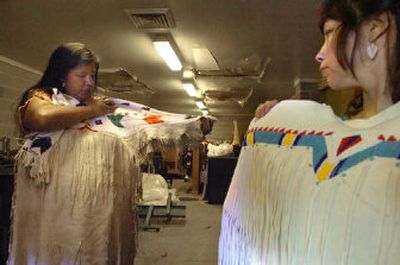
The 97-degree heat hangs around Lisa Hungary’s shoulders like an exhausted prize fighter, its hot breath inescapable. She wears a full-length buckskin dress and a wool Pendleton blanket around her legs. The horse beneath her is willing but thirsty, as they walk into the arena of the Julyamsh Powwow in Post Falls.
On a day like Saturday, pride and tradition trump the weather. The dress Hungary wears is a third-generation heirloom, a garment gifted by a great-aunt who rode into powwows like this one long before Hungary was born. Nothing burns hotter than honor. Riders in the grand entry wear ceremonial dresses that date back a century. Many of the garments were given to the riders when they were between the ages of 12 and 16 years old and being formally recognized as women for the first time.
“I wear mine a couple times a year, to three or four powwows a year – not as often as I’d like to,” said Hungary, who drove to Post Falls to ride into the powwow with her little sister, Lori Sijohn.
The three-day event honors a century-old gathering along the Spokane River of Northwest tribes, including Coeur d’Alene, Spokane, Palouse, Pend Oreille and Flathead. The tribes met on the banks of the river near Post Falls, traded among each other and with fur traders, and competed. To define the occasion, tribes of a century ago borrowed the English word “July” to note the time of the event and melded it with “amsh,” their own word for a sit and gather.
The event died off about 80 years ago but was revived eight years ago by the Coeur d’Alene Tribe. About 800 dancers and 60 drum groups participate now. The final day of this year’s event begins at noon today. Admission is free, but parking at the Greyhound Park and Event Center is $5.
Hungary and Sijohn are both Cayuse Indians from the region of Umatilla, Ore., though Sijohn now lives with her husband, Cliff, a Coeur d’Alene tribal elder, in Plummer, Idaho. The Cayuse were renowned horsemen, the sisters said. The dresses passed down to them from ancestors were cut for riding, wide enough and long enough to not rise above the upper thigh when the women are on horseback. The leather fringe, which hangs long for dramatic effect on a ceremonial dancing dress, is trimmed short to limit its movement on the beaded garments worn by horse riders.
For the most part, the heirloom dresses are unmodified, except that modern American Indian women sometimes have to adjust the garments for size. Their ancestors were both shorter and thinner than contemporary Native Americans, who eat more regularly. Like the rest of America, natives are also overeating, said Hungary, who works as a nurse in Portland. Some of her peers struggle with weight-related health problems like diabetes and high blood pressure.
Sijohn is considerably taller than the two women in her family who wore the dress before her. The garment is supposed to drape below her lower shin. She had to carefully stitch a two-inch sash of tanned buckskin to the bottom of the dress to get it to fit correctly. To match the color of the older, tallowed buckskin, she had to search the mountains for a soft stone of the right color, which she crushed to powder and rubbed into the newly added sash.
Making the dresses, Hungary said, is a gift she credits her sister with, though both women, now 47 and 43, learned as children from their mother and grandmother. Every family has a dressmaker, Hungary said, someone to keep the tradition alive.
In traditional American Indian families, children are steeped in the tradition of ceremonial dress from the time they’re toddlers, the sisters said. The youngest first wear dresses of wool until they’ve proven they’re ready for the guarded privilege of wearing a buckskin garment. All the while, they are told the story of the dress they will someday wear, about who made it and who has worn it proudly since then.
“You don’t eat in it. You don’t drink anything while you’re wearing it,” Hungary said. “You don’t smoke.”
It is a discipline you learn, said Sijohn, through lessons repeated often by elders, and not-so-subtle reminders that respect is the grout that holds honor together.
“My mom had a wooden spoon,” Sijohn said.