
Volunteers build wheelchairs for overseas
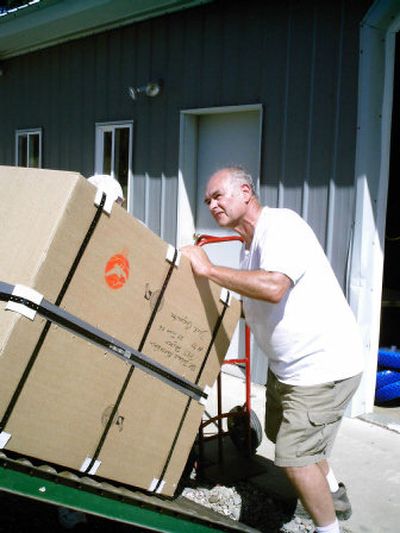
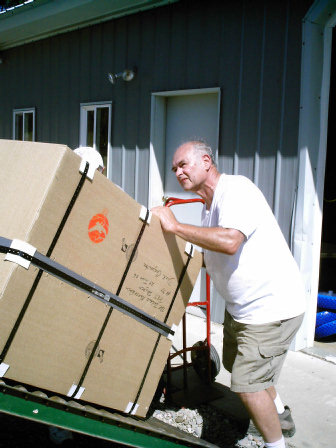
Fifty rugged, hand-cranked wheelchairs known as Personal Energy Transportation vehicles, or PETs, were loaded onto a delivery truck last week by a group of Spokane-area volunteers who spent the past nine months building them.
The three-wheeled devices soon will give new mobility to people who desperately need it.
“These are going to Mongolia, Vietnam, Mexico, Nicaragua and Zimbabwe,” said Dick Carpenter, a retired Spokane attorney who enlisted longtime friends and fellow church members last year to help him build the specialty devices.
“I read a newspaper article, and God touched my heart,” Carpenter says of how he learned of PETs and the need for them.
The Vietnam veteran did some research, got some training, and the Inland Northwest PET Project was born.
Project members who have gathered since October at the shop of retired radiologist Lyle Crecelius, a fellow crew member, say it has been a spirited journey. They enjoy the camaraderie and the creativity, but it’s the knowledge that their efforts are helping people who have lost the use of their legs that keeps them going.
PETs are specially designed for men, women and children who have suffered from such things as polio, birth defects or land-mine accidents.
“It’s a journey of faith” to bring relief to people who otherwise must be carried, rarely leave their homes, or use their arms and hands to drag themselves along dirt roads, says retired Shadle High School teacher Bob Jones, one of about 60 people who actively work on the PET project.
Several area businesses have donated materials and expertise to help make PET pieces, and many individuals have supported the project financially. Recently, for example, $2,000 was donated by supporters in Redmond, Wash., who had a fundraising car wash there.
One PET is estimated to cost $250 to build, pack and ship. PETs from the Inland Northwest are brightly painted, and the next batch will be fitted with turquoise-colored tires instead of black.
Those built locally also have a marking of an eagle on the backrest.
The Inland Northwest group is one of 10 in the United States that construct the devices. Group members network with other volunteers across the country, some who have been active since 1994, when the devices were first developed by U.S. missionaries in Zaire.
Since 1996, PETs have become widely recognized and are used in 50 countries. Initial founders now have a large facility to build PETs in Florida, where Carpenter went for training and to coordinate distribution details.
Much care goes into packing each PET for shipment.
In addition to the partly assembled vehicle, instructions, tools and even a tube of grease, the Spokane crew adds material that goes beyond typical packaging.
“Cushion is critical” for the PETs to arrive sound, says Carpenter, adding that “whatever can be used on the other end is desirable cushion.”
Donated clothes, shoes, stuffed animals and deflated sports balls and ball pumps are packed inside boxes.