
Distinctive past preserved
Small-town museums can be very predictable, with exhibits that are seemingly interchangeable from one to the next, but the Priest Lake museum is an exception to the rule.
The names of museum volunteers might also be found in any town – Pam Martin, Regina Manser, Marita McDonough and Lois Hill. But these women and others have been able to design historical displays that show Priest Lake’s distinctive past.
The museum’s beginnings started with an elderly woman who was moving out of an old home and whose children were fighting over the furniture. She called Lois Hill and asked for help. Hill and her husband George own Hill’s Resort on the west side of Priest Lake. Rather than giving the furniture to the children, the woman wanted to donate it to the community. The Hills stored the furniture, which became the initial “stash” for a museum collection.
Logging history is not a surprise in this wooded part of Idaho. But the early logging is not just displayed in black and white photos on the walls. The museum staff has located old-time loggers and videotaped their stories. They have found and copied old movie film of log drives down Priest River. Watching the men work the logs out of a logjam while standing on the floating logs with the water surging past is pretty amazing. Falling in the river, as seen on the old film, was apparently not only common but an expected part of a dangerous job.
One segment of a video and vintage photos shows a woman who lived way before her time. Nell Shipman (1892-1970) was a free spirit who owned her owned production company. She was a producer, writer, director and star of her own movies at the turn of the 19th century. Her 1916 movie, “God’s Country and the Woman,” made her famous. She brought her production staff and many “wild animals” to Priest Lake and filmed on location.
A museum video with clips from her movies put together by Scott Hill shows her playing with wolves and bears on a very cold and frozen Priest Lake. The film catches her falling into the frigid water as part of a scene she had developed. This was an extraordinary woman and pioneer in the field of outdoor cinematography. The Priest Lake Museum has her story.
When mining is mentioned in North Idaho, the Silver Valley around Kellogg and Wallace is the first area that comes to mind. But the mountains around Priest Lake also were heavily mined, and at one time supported a large town of which little remains except memories and photos.
Like most mining exhibits, the museum’s stark black-and-white photos show part of the mining history. What really brings the history alive are interviews with local residents who can still remember the mining days and the people. One man could remember the many horses used in the underground mines. He remembers that the horses would become unmanageable when they were brought to the surface because the bright sunlight would terrify them.
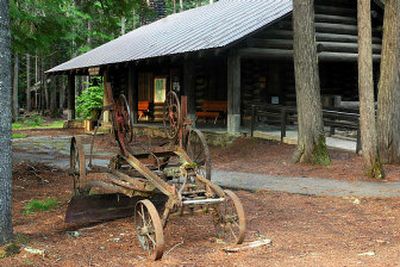
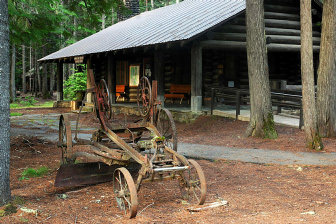
Logging remains an important economic base for the communities around Priest Lake. The museum building was built by the Civilian Conservation Corps in 1935. The building was used by the U.S. Forest Service as a residence and office for the first Priest Lake ranger. Some of the rooms inside are furnished as it would have looked in the 1930s.
Stories about Native Americans, trappers, missionaries, miners, homesteaders, loggers and businessmen can be found in this small community museum. The living-history interviews captured on video provide a deeper, exciting understanding of the history that was and is found around Priest Lake.
This is a museum that can be proud of the heritage found inside its walls.