
Some feel endangered by orca recovery plan
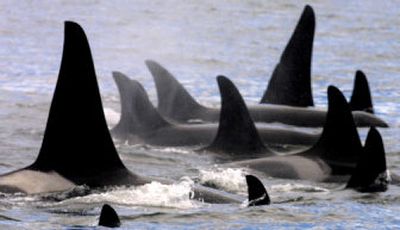
HARO STRAIT – Sleek and fast, more than a dozen orcas slice through this busy waterway, astonishing kayakers as the 9,000-pound killer whales dive under the boats.
These mammals, some nearly a century old, have seen and survived it all: fishermen detonating dynamite charges underwater and defending their catch by shooting them; captures for sale at a fat profit to aquariums.
Those days are over. But today Puget Sound’s southern resident orcas still run a deadly gantlet.
Their favorite food, chinook salmon, also are threatened with extinction. Puget Sound is loaded with toxins and pollution, and its shorelines are encrusted with housing, industrial development, farms and pavement.
Prior to 1800, there may have been more than 200 southern resident orcas. Today, there are about 89. And the federal government has brought in a hammer – the Endangered Species Act – to protect the orca.
But recovery will be difficult. Orcas are at the top of the Puget Sound food chain, and their depletion is an indicator of a deeply troubled ecosystem, many scientists say.
And any proposals to save the orca are guaranteed to rile development, industry and shipping interests, along with many others who depend on Puget Sound for their living. Building, property rights and farming interests already are suing to throw out the listing.
“I see catastrophic economic impacts,” said Tim Harris, general counsel for the Building Industry Association of Washington, a plaintiff in the suit. “I see it slowing and crippling development, driving up housing costs and hurting jobs.”
And saving these creatures, experts say, will require operating in a realm of great uncertainty, and waiting to see results years down the road.
The bottom line: There’s no quick, sure recipe for orca recovery.
The southern resident orcas are one of three forms in the northeastern Pacific and are organized into three pods: J, K and L. Unlike the other populations, southern residents spend a lot of time in Puget Sound, especially in late spring, summer and fall. Scientists know little about their movements the rest of the year.
Southern residents also are distinguished by their diet: They are believed to eat only fish, especially salmon, while other orcas eat seals and other marine mammals.
Southern residents were listed as endangered last year, triggering the requirement to designate a critical habitat for them, now proposed to cover more than 2,500 square miles of Puget Sound, excluding military bases, Hood Canal, near shore and coastal waters.
The federal fisheries service also must create a recovery plan relying, in part, on a conservation plan already in the works, as well as additional advice and comments from scientists and the public.
Yet, despite 30 years of intense study, it’s still unclear which threats are most significant to the southern residents. But a recovery plan is expected to focus on three potential risk factors: food, pollution and vessel effects, including noise.
“There are a lot of gaps in what we know about how these various factors may be affecting the whales,” said Brent Norberg, marine-mammal coordinator for the Northwest regional office of the federal fisheries service. “We don’t have a smoking gun that says, ‘If we fix this piece, and that piece, everything will be rosy.’ “
Researchers are trying to fill in the blanks by studying everything from the orcas’ numbers and movements to the effects of noise and vessel traffic.
“Not knowing what the stressors are makes it hard,” Norberg said. “And these animals are so long-lived, and take so long to reach maturity, it will take a long time to know if recovery is working.”
As a first step, the recovery plan could call for rebuilding salmon runs.
Adults must eat up to about 34 adult salmon a day, and they prefer big, fat and nutrient-rich chinook. Juveniles have big appetites as well, devouring as many as 17 adult salmon a day. But Puget Sound chinook are listed as a threatened species.
Orca recovery could mean reductions in commercial and recreational fishing within the designated critical habitat – as much as 5 percent to 50 percent.
The recovery plan might suggest bolstering other salmon-recovery efforts throughout the region, including the Columbia and Snake rivers.
Secondly, the recovery plan is expected to seek a reduction in pollution and chemical contamination. That would mean addressing industrial-waste disposal, agricultural and household use of chemicals. It also would mean dealing with discharge from wastewater and storm water. And it would mean cleaning up contaminated sites and sediments.
The recovery plan also might call for calmer, quieter waters.
Orcas find their food by sight and sound. And they use their sensitive hearing and a kind of sonar not only to nail prey, but to communicate and navigate. For them, underwater noise is the equivalent of fog for humans, some scientists have concluded. Noise makes it harder for orcas to find what they are looking for, and it may damage their hearing, or at least cause stress.
Yet the Puget Sound and adjoining Haro Strait are among the busiest waterways in the world.
So the recovery plan probably would call for evaluating the need for limits, including how closely vessels of all kinds may approach orcas; closing some areas to boat traffic at certain times; and speed restrictions.