
Black Beauty
The aftermath of a forest fire is a startling sight.
The flames can strip many of the trees and leave much of the ground naked. Green is temporarily transformed to black, the color of doom.
It’s difficult to look on the bright side of a charred forest unless you have the eye of a naturalist, or a native.
When lightning failed them, Native Americans would occasionally torch portions of the surrounding forests right here in the Inland Northwest. They knew that periodic fire would clear the brush to make travel easier and that lush growth would bloom from the ashes to attract more game and rejuvenate important plants, such as huckleberries.
Modern wildlife managers have been burning a few hundred acres here and there throughout the region this spring to create landscape variety in forests clogged with dog-hair trees and brush. A wide variety of wildlife benefits from opening patches in the forest canopy to sunlight and triggering germination in plants that evolved to flourish with wildfire.
The green-up in a burn can be like a candy store for elk.
Insects proliferate in the dead standing timber to bolster another base in the food chain.
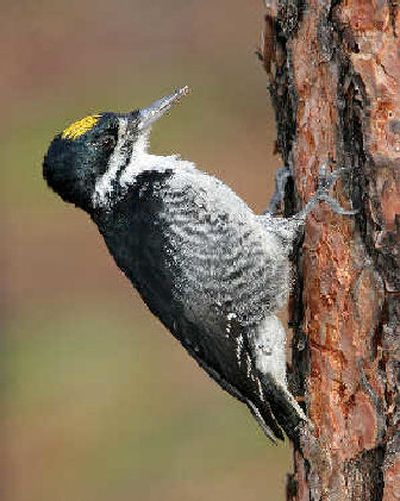
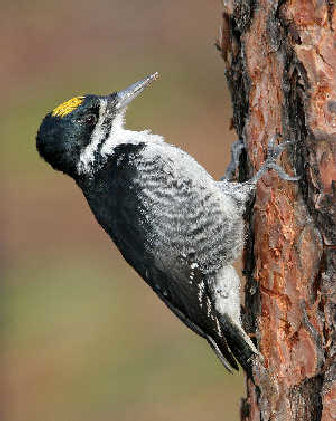
Wildlife photographer Tom Munson documented the lure of a burn and part of the pecking order near the Gifford Ferry Campground along Lake Roosevelt this winter.
“There were white-headed, downy, hairy, pileated, black-backed and three-toed woodpeckers in that single place— that’s a bunch of woodies in one stop,” he said.
Mushrooms and wildflowers see black as a welcome mat, too.
In most cases, life floods back into a burned forest for years after the flames have died out.
Black is beautiful in a forest.