
The war in Iraq: What’s next?
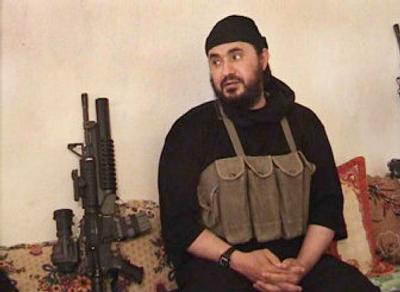
BAGHDAD, Iraq – His somber face, fiery invective and bloody legend helped lure foreign volunteers and cash to prop up the insurgency in Iraq. He taunted his enemies, stirred sectarian rage and took credit for some of the most shocking acts in the annals of modern terrorism.
But Abu Musab al-Zarqawi was mostly a looming image, a man whose contribution to the war in Iraq derived largely from his symbolic value. As a military commander, he held sway over just a fraction of a fraction of the fighters who sow daily bloodshed in Iraq.
Al-Zarqawi was at the top of the U.S. target list in Iraq, and his death seems likely to give a psychological boost to U.S. and Iraqi officials. But in a country overwhelmed by multiple competing armed groups, his end will do little to quell the violence, U.S. intelligence officials, counterterrorism experts and independent analysts said.
“Maybe on the psychological level it will help, but realistically, on the ground, it doesn’t change a thing,” said Nawaf al-Obeid, a security adviser to the Saudi government who has studied the Iraqi insurgency. “This pales in comparison to the real insurgency, which comes from the Iraqis themselves.”
Al-Zarqawi, a one-time street thug who grew up in Jordan, was a phenomenon peculiar to high-tech terrorism. He made a name for himself on Internet and satellite television with his dramatic attacks, gruesome videos and virulently anti-American and anti-Shiite rants.
Indeed, al-Zarqawi’s most important imprint on the war in Iraq may have been his ultra-zealous stance against the sect he recently called “Shiite snakes.” Al-Zarqawi labored to stoke ancient animosities between the main sects of Islam, encouraging Sunnis to rise up and kill Shiites. American and Iraqi officials believe he engineered the bombing of the Shiite Golden Mosque in Samarra, an incendiary strike that unleashed waves of sectarian killings.
But by now, “sectarianism has assumed a dynamic all its own, and it may be very hard to turn the page,” said Joost Hiltermann, an Iraq expert with the International Crisis Group.
Al-Zarqawi’s death “may dampen some of the sectarian rhetoric we’ve heard,” Hiltermann said, but the tit-for-tat blood feud between Iraq’s sects, which generates much of the violence in today’s Iraq, is likely to continue with or without him.
The network al-Zarqawi headed was small but brutal – a few hundred fighters, by some estimates. Known as ruthless men who sawed heads off their captives and murdered fellow Muslims, they were one of several gangs of foreign fighters operating in Iraq. Collectively, the foreign interlopers are believed to comprise just a small corner of a predominantly homegrown insurgency.
Although the anti-American fighters were often portrayed as a monolith, the foreign ideologues were fighting for a radically different cause than many of their local counterparts.
Al-Zarqawi was waging a “holy war” to kick out the Americans and British troops whom he described as modern-day Crusaders and to establish Islamic rule in Baghdad. That aim did not mesh well with the goal of many local Sunnis, secular Baathists who used violence as a tool to regain political power they had lost after the U.S.-led invasion.
At times, al-Zarqawi and his men struggled to find their footing within the insurgency. He often angered Sunni tribal leaders by operating on their turf, chopping off heads and antagonizing the Shiites.
“The Iraqi insurgency was never based on Zarqawi’s ideology, but on the alienation of Iraqi Sunnis in the new Iraqi order,” Hiltermann said. “They feel they have been sidelined, and that frustration fueled an insurgency against the American occupation and its agents. Zarqawi exploited that.”
U.S. and Iraqi commanders have discussed al-Zarqawi’s most likely successor. A U.S. military commander told reporters Thursday that they have identified Abu al-Masari, an Egyptian-born, Afghanistan-trained fighter who is believed to have come to Iraq in 2002 to set up Baghdad’s first al-Qaida cell.
“He’s the most logical one out there as you look at that structure out there and how they operate,” Maj. Gen. William B. Caldwell IV, a military spokesman, said Thursday. “He will probably try to move up in there.”
Another possible successor is an Iraqi known as Abdullah Rashid al-Baghdadi. Al-Baghdadi was named in a statement posted on an Islamic Web site earlier this year by an organization calling itself the Mujahideen Shura Council in Iraq, a self-described umbrella organization formed to unify the efforts of the country’s six major insurgency groups, including al-Qaida in Iraq.
U.S. counterterrorism and intelligence officials said little is known about al-Baghdadi, including whether he really exists. “Now might be a chance for us to see if there is an al-Baghdadi,” said one senior U.S. official.
There are other possibilities.
For example, U.S. and Iraqi officials announced that al-Zarqawi’s spiritual adviser, Abu Abdul-Rahman al-Iraqi, was among others killed with the Jordanian-born terror mastermind when U.S. warplanes bombed a house northeast of Baghdad on Wednesday evening.
But an Internet statement that al-Qaida posted Thursday confirming al-Zarqawi’s death was signed by a man with the same name, casting doubt on the supposition that al-Iraqi had been killed.
Still other analysts said that to ask who might come next would be to pose the wrong question.
“I’m not sure talking about a successor to Zarqawi is necessarily the right way to think about it,” said Paul Pillar, former deputy at the CIA’s counterterrorism center.
“Twelve months from now there might not be anybody you could identify as the person who filled Zarqawi’s shoes. His organization could fragment, morph into something else, and the violence level could continue at the level it is today.”