
Rock garden: Ongoing project

Whitney Stoffel wanted a memory of childhood hikes in the Canadian Rockies, so he set out to create a rock garden that captured his experiences.
Unfortunately, at first he didn’t fully share his vision with his parents, Keith and Dorothy Stoffel.
“I came home and 16 tons of boulders were being unloaded,” said Dorothy. “The truck operator was positioning the big rocks; the rest of the rocks were out in the street.” She was expecting something a little neater.
What they all got was a family project that still brings Whitney and younger brother Tyler home from college to work on it.
Stoffel began building his rock garden two years ago in a 20-by-20 foot space in the street-sideback yard of his parents’ South Hill home.
A rock garden isn’t just a pile of rocks though. Each rock is carefully placed.
“We’d come home and the boys would have this much wall built, and the next day they’d rip it out because it just wasn’t right,” said Dorothy.
In a good rock garden design, the rocks look natural. If they have a lot of cracks and fissures running through them, they look more natural if the cracks run in the same direction. In the case of the Stoffels’ basalt, it needed to resemble rock that had fallen off a cliff. As they stacked rock, they created large and small planting pockets for the plants.
Next they had to apply soil.
“Make sure you have good topsoil,” said Keith, their dad. “You can talk about sun, shade and water but, if you don’t have good soil, it isn’t going to work.” Most rock garden plants live in small soil pockets in nature. Excess water must drain quickly or the plants rot. After some experimenting, the Stoffels added gravel and a little organic matter to their basic clay soil and then backfilled the planting pockets. They installed sprinkler heads to provide water.
It took most of the summer to place the rocks and fill the planting pockets. Most plants suitable for rock gardens tend to be small or dwarf forms, so the Stoffels put in several dwarf conifers to anchor the garden and add interest in the winter.
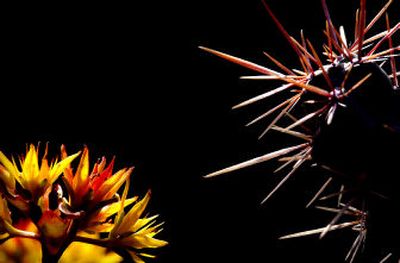
In the small pockets, they used sedums, saxifrages, ice plants (Delosperma) and even a few cacti.
In the larger pockets they added plants like California fuchsia (Zauschneria), penstemons, coreopsis, ornamental grasses and ornamental oreganos. .
“The overall goal was to have something going on all the time,” said Dorothy.
If imitation is the sincerest form of flattery; their garden is a success. At first a few neighbors had a tough time getting used to it, but that has changed lately.
“We’ve seen several smaller versions around the neighborhood though,” said Keith.